
A land-clearing contractor running a compact track loader with a Caterpillar HM315C mulching head hit a buried rock ledge on a residential job. Two teeth lost their carbide in the same pass, the holders took a beating, and the local dealer quoted a lead time that would have parked the machine for a week. He swapped in aftermarket C/3 carbide teeth from stock and finished the job. The next season he ordered a spare set before the first job, not after the first breakage.
That is the pattern with Caterpillar mulcher teeth. They are consumables, they fail fast when the feed turns rocky, and the difference between a smooth season and a parked machine is knowing which tooth type your head takes and keeping a set on the shelf. This guide covers the Cat tooth types, the C/3 pattern that also fits FAE rotors, the maintenance routine and how to match a tooth to your head.
How a Cat mulching head cuts
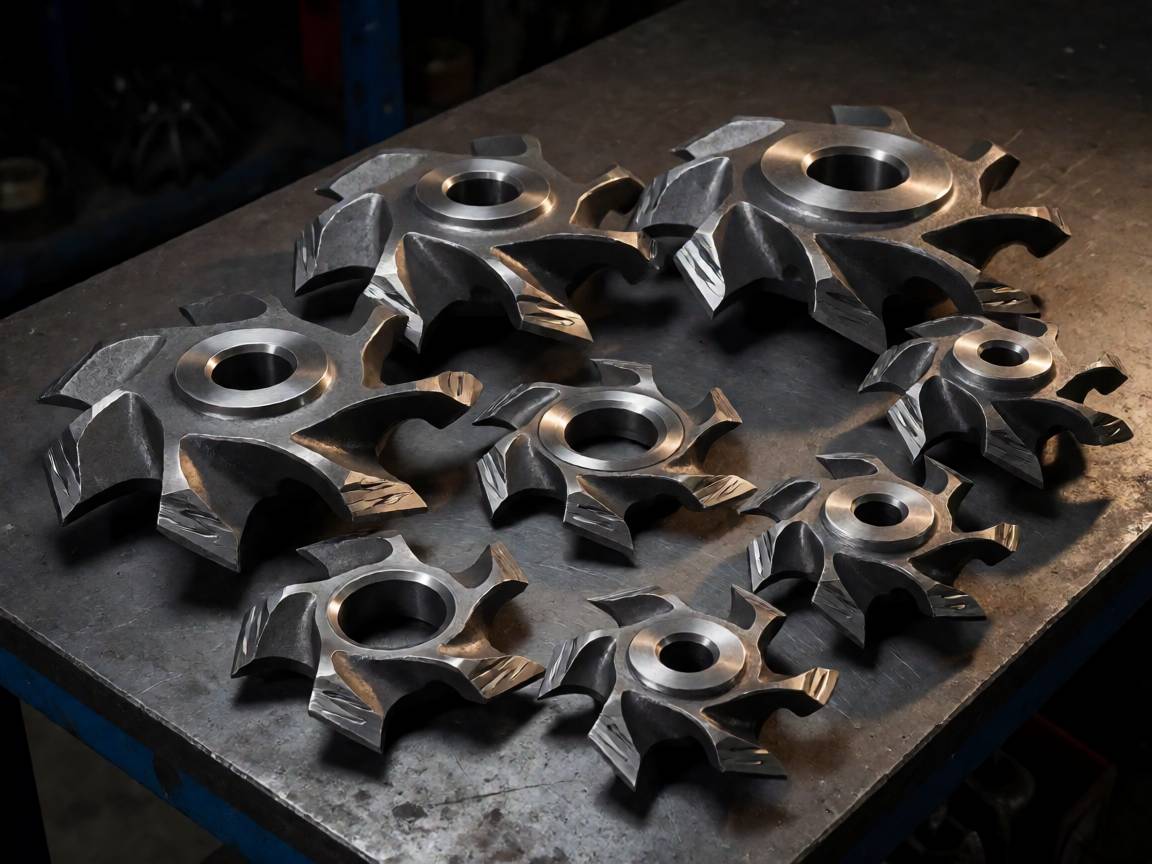
A Cat mulching head is a drum rotor with rows of tooth holders. Each holder carries a tooth that chips and mulches vegetation against a counter-blade as the drum turns. The tooth is the only part that touches the work, so it takes the abrasion from wood, dirt and rock, and it takes the shock when the drum hits something it cannot cut.
Cat builds the heads for compact track loaders and mini excavators — the HM112, HM115, HM208, HM210 and HM215 for the smaller machines, and the HM316, HM416, HM418, HM518, HM2615, HM3013, HM4015, HM4815, HM5515 and HM6015 for the larger ones. The tooth pattern changes with the head, and the holder decides which tooth will seat.
The four Cat tooth types
Caterpillar lists four main tooth types, and each one is a different answer to the same question: how abrasive and how rocky is the ground you are clearing?
Chisel (reversible)
A knife-edge chisel that slices through wood and vegetation. It is the standard general-purpose tooth for agricultural and light land clearing, and it is reversible so both edges can be used. It is the wrong tooth for rock — the edge rolls over fast.
Carbide
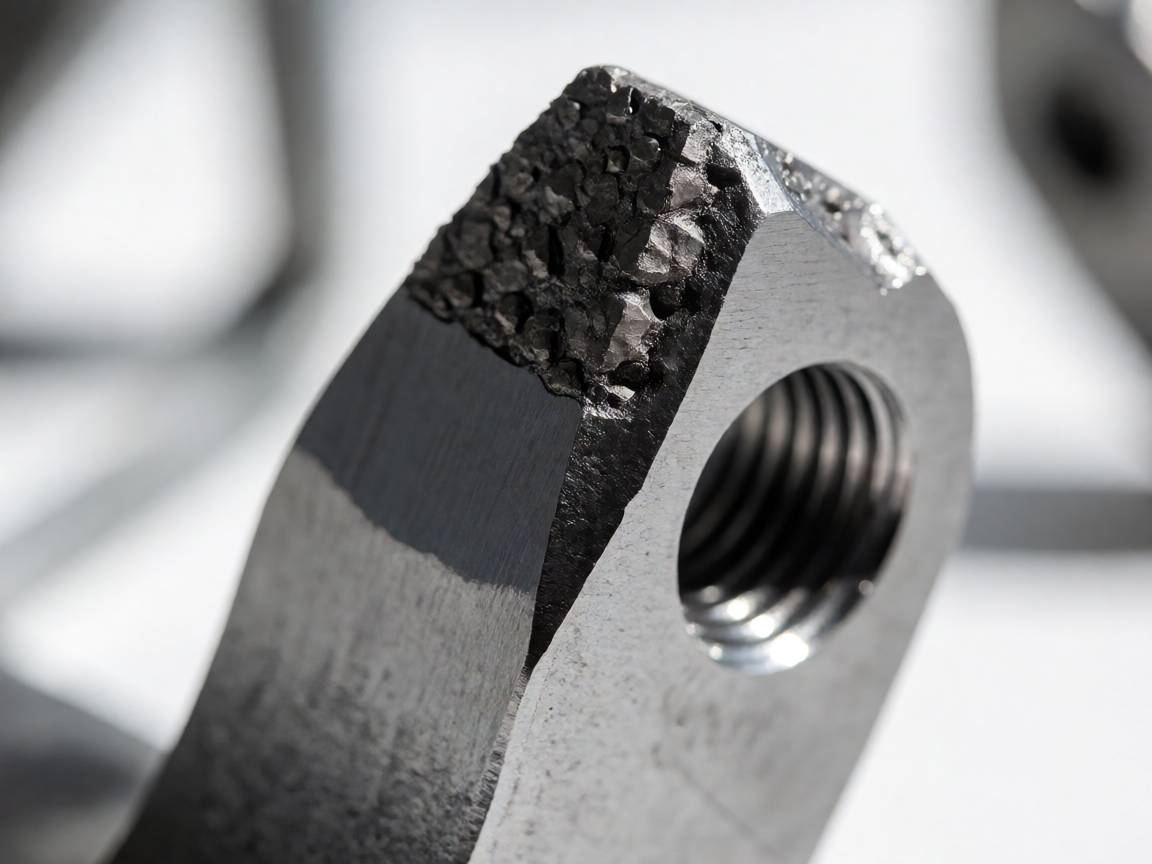
A carbide-tipped tooth for extra wear and extended life. Cat’s standard carbide tooth (part 475-2810) is the workhorse for contractors clearing mixed brush and small trees. The carbide holds an edge through abrasive wood and soil that dulls a chisel in hours.
Rock resistant
Even more carbide surface than the standard carbide tooth, built for ground where rock is part of the job. If you are clearing rocky pasture, fence lines or ground with buried stone, this is the tooth that survives it.
Side cutting
Teeth with a left or right side cutter that trim the edge of the cut and keep the head from binding. Used on the outside positions of the drum. The side cutters are a separate part number from the center teeth and are usually replaced with them.
The practical rule: chisel for clean softwood and grass, carbide for general brush and small trees, rock resistant where stone is in the ground, and side cutters on the edges. Mixing them wrongly is the fastest way to burn through a set in a week.
C/3 explained: the FAE and Cat interchange
The C/3 tooth is the pattern that made aftermarket mulcher teeth a commodity. Cat’s C/3 holder takes the same tooth as the FAE C/3 rotor, which means one tooth fits FAE UML, UMM, UMM/S, UMH/S, SFL, STCL, 140U, 200U, 300U and 500U mulchers as well as Cat HM315C, HM415C and HM418C heads, and some Rayco and Takeuchi machines.
That interchange is why the part numbers cross so cleanly. Cat 475-2810 crosses to FAE 111530017-K, the left side cutter 475-2812 crosses to 112700005-K, and the right side cutter 475-2811 crosses to 112700004-K. A C/3 tooth with embedded tungsten carbide tips and an M20 fine thread — like our BR-FM2023 C3 Mini carbide tooth — covers that whole family. If you run both FAE and Cat machines, one tooth pattern can serve both, which simplifies stock enormously.
Carbide or chisel — the honest call
Chisel teeth cut faster in clean wood and cost less. They also dull quickly in abrasive soil and roll their edge on the first rock. Carbide teeth cost more per tooth and hold an edge through abrasive work, which is why contractors on mixed ground standardise on carbide and keep chisels for the clean jobs.
The rock-resistant step is not marketing. More carbide surface means more wear material between the steel body and the rock, and the tooth lasts longer in stony ground. But no tooth survives grinding rock continuously — if your job is clearing a rock ledge, the honest answer is to change the tooth before the holder pays for it. A worn holder is a far bigger bill than a set of teeth.
Maintenance and replacement
Start at the drum rotor. Keep it free of debris, clear any buildup along the side bearings and remove mud packed inside the mulcher. Then inspect the teeth: if the carbide has broken off or any teeth are missing, replace them, and replace any damaged holders at the same time.
To sharpen a chisel tooth, remove it and grind the top flat surface until the edge is sharp. To replace a tooth: loosen and remove the nuts, bolts and spring washers; pull the old tooth from the holder; seat the new tooth fully; install the nuts, bolts and washers through the holder; and torque to the specification for your head. A tooth that is not fully seated will work loose and damage the holder.
When to replace Cat mulcher teeth
Replace the tooth when the carbide is worn down or missing, when the holder shows damage, or when the cutting edge no longer performs — not when the drum finally stops cutting. A missing carbide means the steel body is now the cutting edge, and it will wear the holder and the counter-blade while it does.
What we build for mulching heads
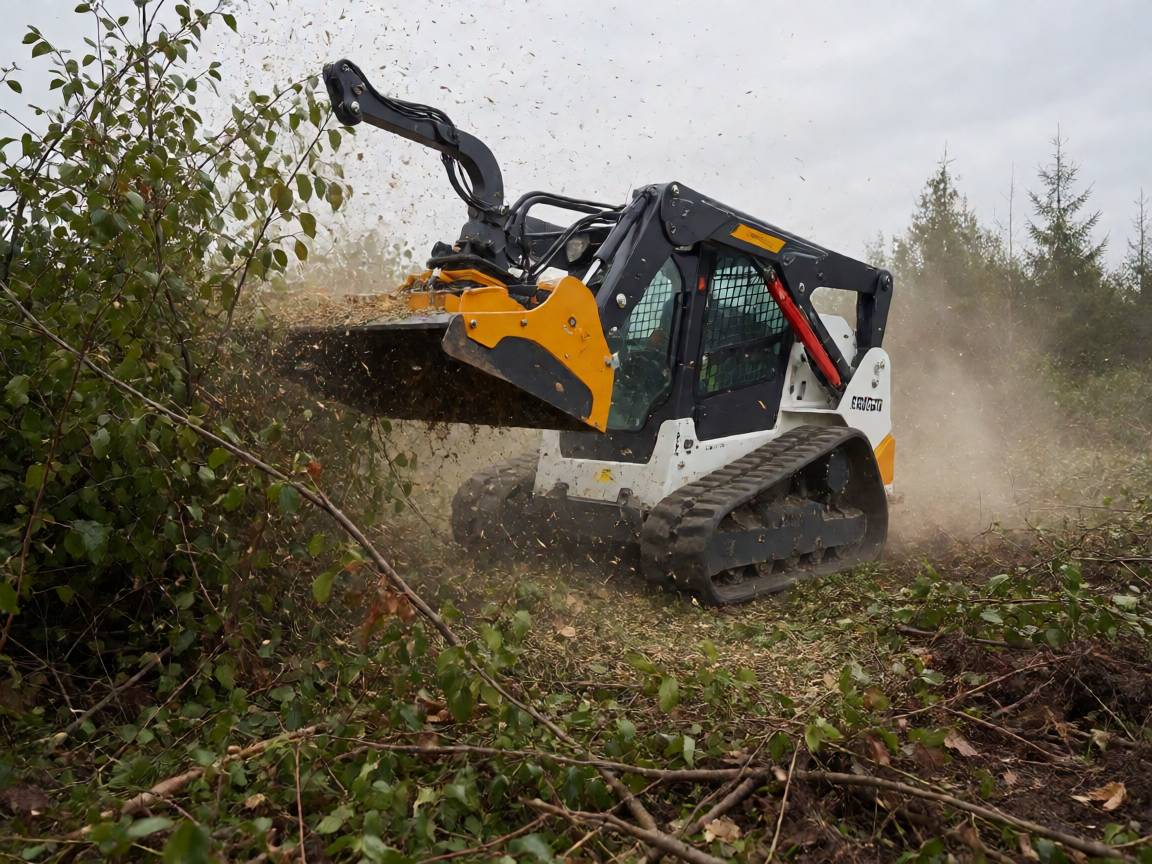
Our Caterpillar mulcher teeth are carbide-tipped replacement teeth for Cat HM-series heads and the FAE C/3 family. The BR-FM2023 C3 Mini carbide tooth is the C3 Mini pattern with embedded tungsten carbide tips and an M20 fine thread, built as a direct replacement for the Cat and FAE C/3 holders. Bodies are forged, carbide is brazed under controlled temperature, and the tooth is checked for seat depth and thread fit before packing.
The full range is in our forestry mulcher wear parts category, alongside the fixed-tooth mulcher patterns. For the FAE side of the same family, our FAE mulcher teeth guide covers the rotor-by-rotor fit in detail. Monthly container shipments go to contractors and dealers worldwide, and mixed trial sets let you run a carbide and a chisel tooth side by side before committing. If you also run a grinder or a mulcher with bolt-on wear plate, our chocky bars covers that part of the same job.
Frequently asked questions
Related guides
- forestry mulcher teeth guide
- skid steer mulcher teeth guide
- Denis Cimaf mulcher teeth guide
- forestry mulcher wear parts range
- mulcher teeth installation and torque guide
- /loftness-mulcher-teeth-replacement-guide/
Are these genuine Caterpillar teeth?
No. Baurong is an independent aftermarket manufacturer. Caterpillar, FAE and other brand names on this page describe compatibility only and remain the property of their owners. Our teeth are dimensioned to the C/3 and related holder patterns and checked against sample holders before production.
Will a C/3 tooth fit both my Cat and FAE mulchers?
In most cases yes. The C/3 holder pattern is shared between Cat HM-series heads and the FAE C/3 rotor family. Tell us your exact models — for example HM315C and UML/SSL — and we will confirm the fit and the bolt or thread pattern before shipping.
How often should I check mulcher teeth?
Check the drum and teeth at the start of every working day, and inspect the carbide after any job that involved rock or buried debris. Replace any tooth with missing or worn carbide immediately, and replace damaged holders at the same time.
What lead time should I plan for mulcher teeth?
Standard patterns ship on our monthly container schedule, a few weeks including transit. Contractors who break teeth on rock should keep a spare set on the shelf. Tell us your head model and monthly volume and we will size a standing order.
Tell us your Cat head model, your rotor type (C/3, Type C, Type E) and the ground you are clearing, and we will spec the tooth before anything ships. Send the OEM part number if you have it. You can contact us or pull a mixed trial set and test carbide against chisel on your own jobs.
Related posts

AHWI and Prinoth Mulcher Knives: Types, Fit and Wear
AHWI and Prinoth mulcher knives explained: knife versus carbide hammer, the UPT and M-Class rotor families, how to identify the blade on your rotor, and how wear actually progresses on a knife edge.

Vermeer Stump Grinder Teeth: Wheel and Vertical Grinder Fit
Vermeer stump grinder teeth by machine layout: wheel versus vertical grinders, the tooth styles each one takes, how to read wear, and how to match a replacement by dimension instead of by part number alone.

Bobcat Mulcher Teeth: Drum and Disc Fit, Wear and Replacement
Bobcat mulcher teeth differ between drum and disc heads. What the OEM part numbers map to, how the BR-FM2034 replacement fits, the two 1/2 inch UNF threads that decide it, and when a tooth is finished.

Haybuster and Duratech Grinder Teeth: A Fit and Wear Guide
Tub grinder teeth for Haybuster and Duratech machines: how tub and horizontal grinders load their hammers differently, the severe duty replacement that fits both, wear signs, and how to match a tooth by dimension.

Denis Cimaf DCC-301 and DCH-303: Tooth, Holder and Fitment Reference
How to read the Denis Cimaf part numbering for mulcher teeth and holders, what DCC-301 and DCH-303 actually are, how to check wear on the tooth and the holder, and how to order the right replacement by dimension.