
A yard running a tub grinder on stumps and clean-up wood can go through a set of hammers in a few weeks when the material carries grit — and the operator usually blames the hammers. Most of the time the hammers are fine and the problem is that the machine is being fed material it was not set up for, with teeth that were chosen for the wrong duty class.
Haybuster and Duratech grinder teeth are the same wear part family: heavy forged hammers and teeth that take the impact of stumps, pallets and demolition wood. This guide covers how tub and horizontal machines load those parts, the severe duty replacement that fits both, and the checks that decide when a hammer is finished. For the wider grinder picture see our Peterson Pacific and Terex CBI grinder wear parts, and for tub grinder cutting theory the Morbark grinder teeth guide.
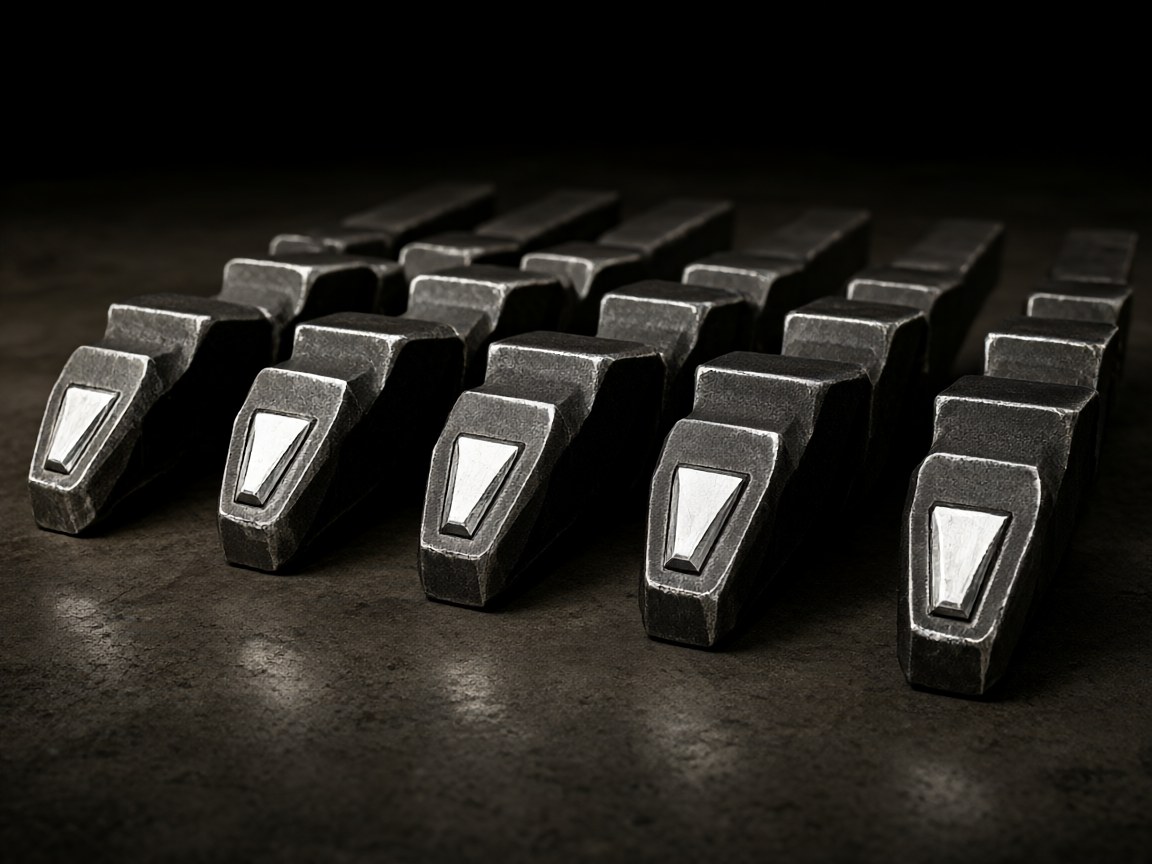
Tub grinder versus horizontal: two different wear profiles
The tooth in a tub grinder and the tooth in a horizontal grinder are often confused because both look like a heavy hammer. They fail differently:
- Tub grinders drop material onto a spinning rotor from above. The hammers see high impact and a lot of free-swinging, and the wear face gets hammered rather than dragged.
- Horizontal grinders feed material into the rotor with a feed roller. The teeth see more sustained abrasion from the material being pushed past them, and less pure impact.
- The consequence: a tooth that survives beautifully in one machine can be the wrong alloy and the wrong geometry in the other, even if it bolts up.
What the Haybuster line takes
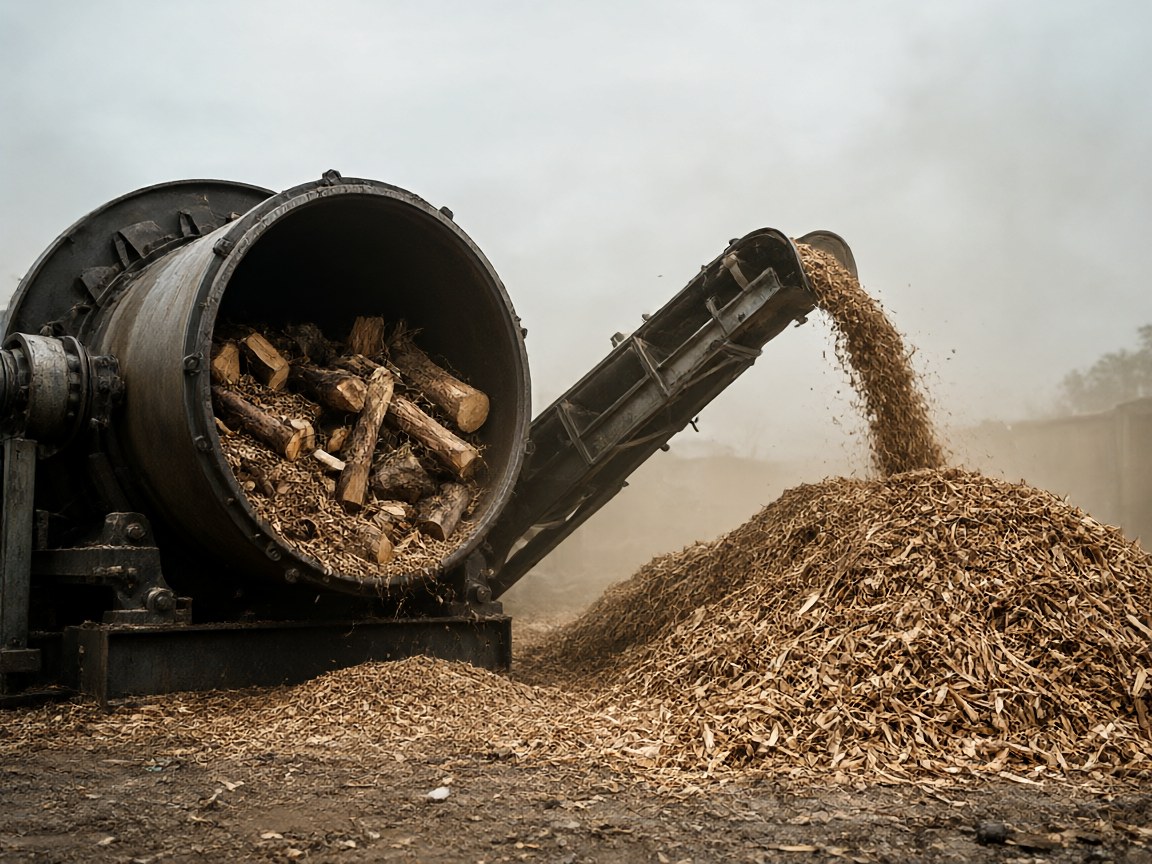
Haybuster tub grinders — the H-1030, H-1130, H-1135E and 1155 machines that dominate the rental and municipal fleets — run replaceable hammers on the rotor and a screen below. Screen size and hammer condition together decide the product; a worn hammer with a fine screen produces dust and heat instead of mulch.
Duratech horizontal grinders use a comparable duty class of tooth in a different mounting arrangement. Because both machines are fed the same kind of material in the same yards, the same aftermarket part often covers both — which is exactly the case for the tooth below.
BR-FM2028 — one tooth for Haybuster, Duratech and more
The BR-FM2028 grinder tooth is a severe duty replacement tooth fitting Haybuster and Duratech grinders, Loftness forestry mulchers and Valentini stone crushers. It carries one large rock-crushing carbide tip with additional carbide wear protection on the body, uses two M16 fine threads, and is specified with the SI128 / SI129 compatible hardware set. Body 81.2 × 40 × 40 mm, 0.6 kg.
That combination — a single big tip plus body protection — is what makes it work on contaminated wood. A tooth with a thin carbide edge will cut faster in clean material and be gone in a week when the pile contains dirt, rock or concrete dust.
Wear signs that mean replace, not sharpen
- the carbide tip is flat into the steel, or has chipped away on a corner;
- the leading face of the body is rounded and polished — the hammer is no longer biting;
- the bolt hole has gone oval, or the tooth will not sit flat on a clean seat;
- throughput has dropped and the machine needs a second pass on the same pile;
- screen blinding has increased because the hammers are pushing material rather than cutting it.
Grinder hammers are generally not a sharpening item. Grinding a worn hammer removes the hardened surface and the geometry that creates the cutting action; on carbide-tipped teeth grinding the steel under the tip only removes its support. Replace them.
Matching a replacement by dimension
- Measure the hammer: overall length, height of the body, and width at the working face.
- Identify the thread: two M16 fine threads is the specification on the BR-FM2028; a 1/2 inch or 5/8 inch UNF thread is a different part.
- Note the rotor position — centre and outer positions sometimes carry different parts.
- Photograph the worn tooth beside a ruler plus the mounting face.
- Send the machine model and the rotor serial if it is legible.
BauRong has been forging wear parts since 2009 and machines these teeth to the original seating, so no rotor modification is needed. Browse the grinder tip product range and wood recycling wear parts, or contact us with the machine model for a quotation within 24 hours.
Related guides
- Peterson Pacific and Terex CBI grinder wear parts
- Morbark grinder teeth guide
- stump grinder teeth replacement guide
- mulcher teeth installation and torque guide
- grinder tip product range
Frequently asked questions
Do Haybuster and Duratech grinders use the same teeth?
They share a comparable duty class of replaceable tooth, and one aftermarket part — the BR-FM2028 — is specified to fit both Haybuster and Duratech grinders as well as Loftness mulchers and Valentini stone crushers. Confirm by measuring the body and the thread pattern before ordering.
Should grinder teeth be sharpened or replaced?
Grinder hammers and carbide tipped teeth are replaceable wear parts, not a sharpening item. Grinding removes the hardened surface and the cutting geometry, and grinding the steel under a carbide tip removes its support. Replace when the tip is flat, chipped or the body is rounded.
What causes premature grinder tooth wear?
Most premature wear comes from material, not from the tooth: dirt, grit and stone in the pile abrade the body, and metal or concrete in stumps chips carbide. Feeding cleaner material, or moving to a severe duty tooth with body protection, is what actually extends life.
How often should grinder hammers be checked?
Inspect at every screen change and at least weekly on machines running daily. Check the carbide, the seating face and the bolt torque together — a loose hammer damages the holder long before the carbide is worn out.
Related posts

AHWI and Prinoth Mulcher Knives: Types, Fit and Wear
AHWI and Prinoth mulcher knives explained: knife versus carbide hammer, the UPT and M-Class rotor families, how to identify the blade on your rotor, and how wear actually progresses on a knife edge.

Vermeer Stump Grinder Teeth: Wheel and Vertical Grinder Fit
Vermeer stump grinder teeth by machine layout: wheel versus vertical grinders, the tooth styles each one takes, how to read wear, and how to match a replacement by dimension instead of by part number alone.

Bobcat Mulcher Teeth: Drum and Disc Fit, Wear and Replacement
Bobcat mulcher teeth differ between drum and disc heads. What the OEM part numbers map to, how the BR-FM2034 replacement fits, the two 1/2 inch UNF threads that decide it, and when a tooth is finished.

Haybuster and Duratech Grinder Teeth: A Fit and Wear Guide
Tub grinder teeth for Haybuster and Duratech machines: how tub and horizontal grinders load their hammers differently, the severe duty replacement that fits both, wear signs, and how to match a tooth by dimension.

Denis Cimaf DCC-301 and DCH-303: Tooth, Holder and Fitment Reference
How to read the Denis Cimaf part numbering for mulcher teeth and holders, what DCC-301 and DCH-303 actually are, how to check wear on the tooth and the holder, and how to order the right replacement by dimension.