A quarry manager in Western Australia once told us his bucket rebuild budget was the only line item he could not predict. The lip would look fine at the monthly inspection, then lose six millimeters of steel by the next one. His welders were good. His steel was good. The problem was that he was protecting a 400 HB bucket with more of the same steel, in a job that demanded something much harder.
That is the job chocky bars exist for. We manufacture them in our Wenzhou factory, and this guide explains what they are, where they belong, and how to avoid the mistakes we see buyers make.
What a chocky bar actually is
A chocky bar is a small bimetallic wear block. The working face is a high-chromium white cast iron, typically in the 60 to 65 HRC range, which is roughly twice as hard as the wear plate used on most buckets. The backing is plain weldable mild steel. The two are bonded metallurgically, not glued or bolted, so they act as one piece.
The design solves a problem that no single material can. White iron that hard shrugs off abrasion, but on its own it is brittle, cannot be bent, and cannot be welded. Mild steel welds beautifully and absorbs impact but wears quickly. Bonded together, the white iron takes the abrasion while the steel backing carries the attachment and soaks up the hits. Some versions are notched along the backing so they can be cut and shaped to follow curved surfaces. The segmented look is where the field nickname comes from: chocolate bars.
Chocky bars, wear bars, and wear buttons: three different jobs
Buyers often use the names interchangeably, and suppliers are sometimes happy to let them. The distinctions matter because each form suits a different wear pattern:
- Chocky bars and blocks are the short, notched, formable versions. They fit curved and irregular surfaces, and the segmentation limits crack travel across the wear face. Best for bucket side plates, corners, and anywhere the wear pattern is uneven.
- Wear bars are longer and straighter, made for continuous runs such as bucket lips, chute rails, and hopper edges.
- Wear buttons are round or shaped inserts for single points of concentrated abuse: feeder transitions, crusher mouths, spots where material drops and scours one small area.
Where chocky bars earn their keep
The common thread in every good application is sliding abrasion against a surface you cannot afford to rebuild. The classics:
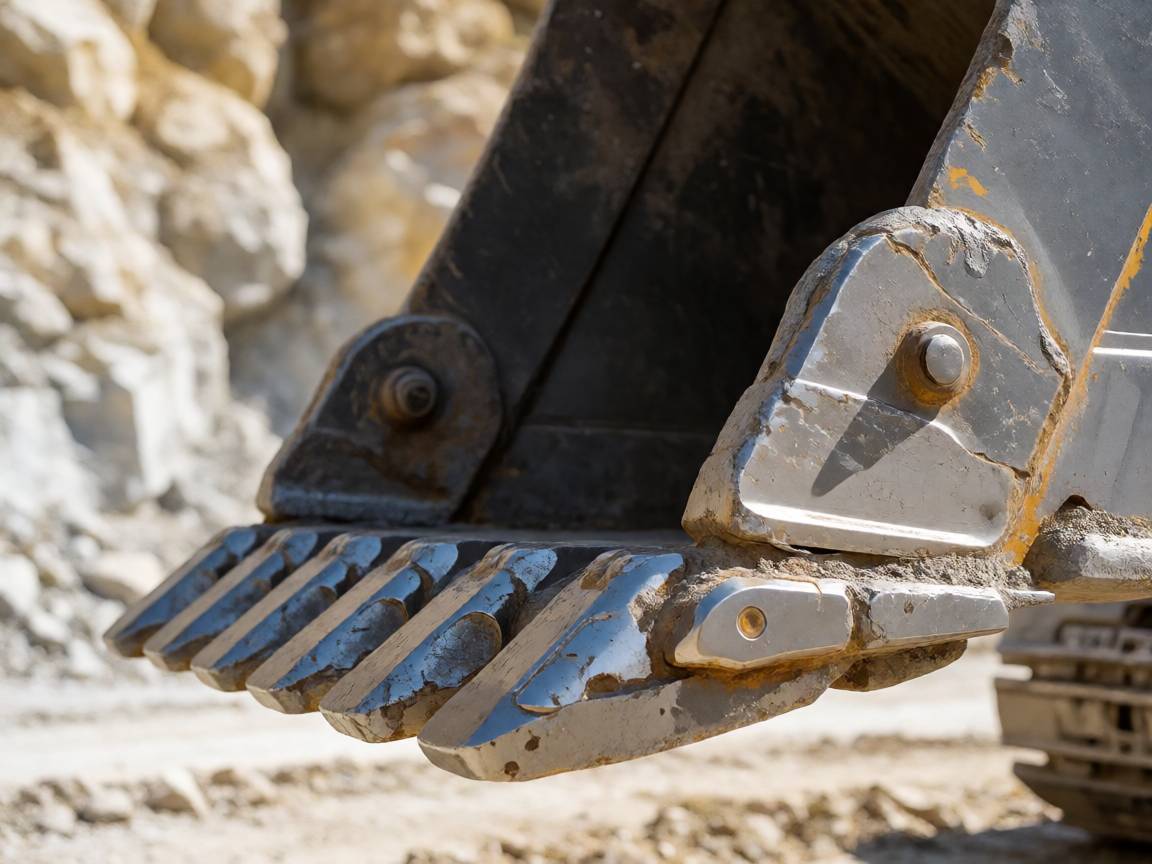
- Excavator and loader buckets – side plates above the lip, the lip itself, and heel corners. In rock digging, these zones can lose steel faster than cutting edges.
- Crusher housings and feeders – feed zones where ore free-falls and scours. Bars here protect the parent plate without adding much weight.
- Chutes and hoppers – discharge points and transfer liners. Segmented bars follow the chute curve and can be replaced one block at a time.
- Shredder and recycling rotors – disc faces and edge zones that see constant abrasion from contaminated material.
Reading hardness specs honestly
Every catalog in this industry advertises big hardness numbers. Two cautions from the factory floor. First, hardness on a datasheet is measured on a flat test coupon; what matters is whether the whole casting holds that hardness, and cheap castings vary a lot block to block. Second, harder is not automatically better. A 63 HRC face on a backing that was poorly bonded will spall under impact, and then you own a harder problem than wear. Ask suppliers how the bond is made and how they check it, not just what the number is.
Installation decides whether they stay on
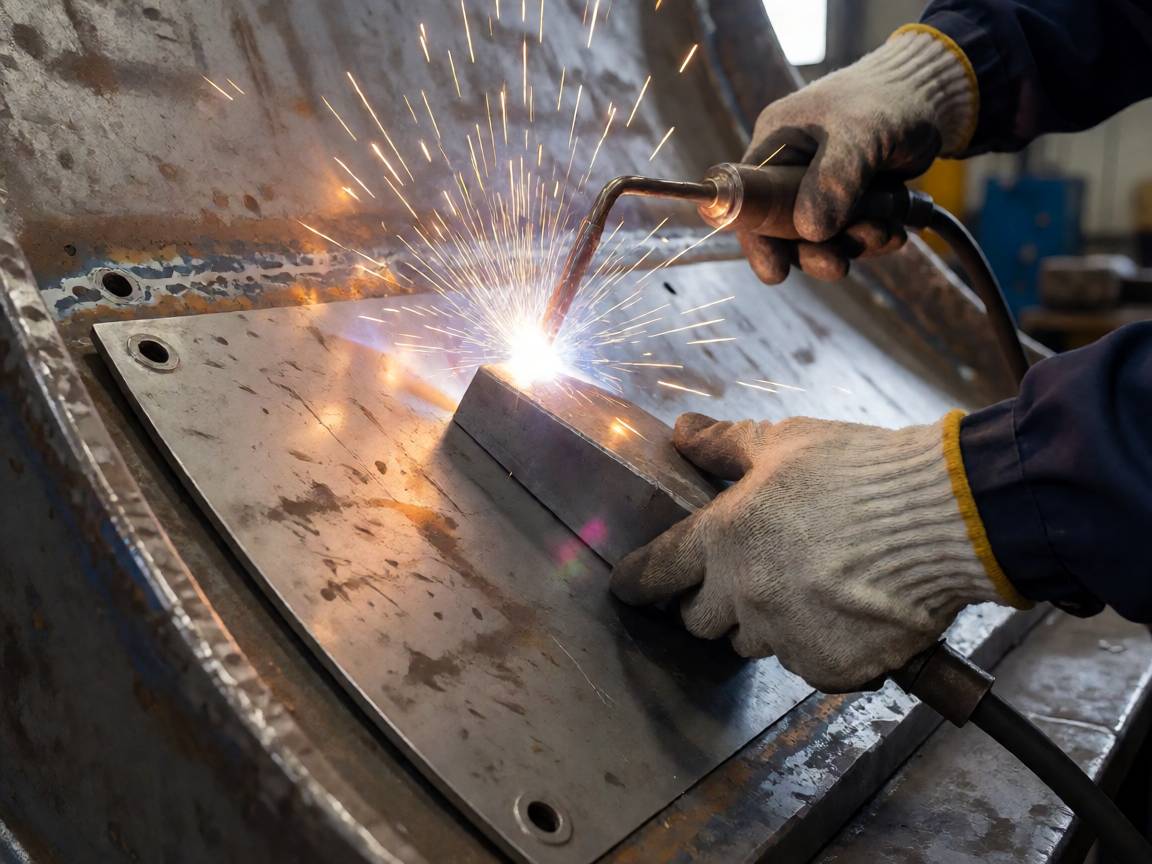
A chocky bar fails in the field for one of two reasons: bad bonding from the factory, or bad welding on site. The second one is preventable. Four rules:
- Weld only the mild steel backing. If the arc touches the white iron, you crack it, and the crack propagates under the first load.
- Grind the parent surface to clean metal. Paint, rust, and grease are the three most common causes of a bar coming off.
- Stitch-weld rather than running one continuous bead, to limit heat input into the parent plate.
- Check alignment before every tack. A bar that is even slightly proud of the surface will be ripped off by the material flow it was meant to resist.
When to replace them
The practical rule our mining customers use: replace a bar when its white iron face has worn to roughly half its original thickness, or when the backing starts taking direct abrasion. Past that point the parent steel behind it starts paying the bill. The advantage of segmented bars shows up here too. You inspect block by block, and you replace only the blocks that are gone, instead of stripping a whole liner for one worn corner.
What to look for in a supplier
This market runs from excellent to decorative. The differences hide in the process: whether the foundry controls the white iron chemistry batch to batch, how the bond is formed and tested, and whether dimensions are machined or sorted by eye. Our chocky bar range covers standard bars, wear buttons, and custom profiles produced to drawings – including the BR-CB5150 cast bar for bucket protection, the BR-WB5060 wear bar for straight runs, and the BR-LP1920 for liner packages. Send a wear pattern sketch or a worn sample, and we will propose a layout before quoting.
Questions we get asked
Can chocky bars be cut or bent to fit?
The notched versions can be cut and formed cold to follow gentle curves, because the notches break the backing into flexible segments. Tight radii need a different profile or individual blocks. If you send the surface radius, we recommend the right form.
What hardness should I ask for?
Around 60 to 65 HRC on the white iron face is the practical ceiling before brittleness costs more than the hardness gains. For impact-heavy zones, slightly softer and tougher often outlasts the hardest bar on the shelf. Tell us what hits the surface and we will suggest a grade.
Do you supply complete liner packages?
Yes. Beyond individual bars and buttons, we design full liner layouts for chutes, hoppers, and crusher zones, with installation drawings. It is usually cheaper than buying piece by piece and finding out the gaps on site.
What is the minimum order?
A trial batch is fine. Most maintenance teams start with a small set for their worst wear zone, measure the life they get, and scale from there. Contact us through the contact page with your equipment details and we reply within 24 hours.
Bucket steel is expensive to replace and cheap to protect. If your wear zones are eating rebuild budget, browse our chocky bars and wear liners range, or send us your wear pattern for a layout proposal. And if your machines also grind stumps or mulch brush, our guides to stump grinder teeth and FAE mulcher teeth cover the cutting-tool side of the business.
Related posts

Bandit Beast Wear Parts: A Practical Guide to Teeth, Cutterbodies and Rakers
A grinding contractor in Ohio added a second shift on his 3680XP to keep up with tear-off shingles, and his wear-parts bill doubled in a month. The teeth were not wearing out faster — he was simply ru...

Denis Cimaf Mulcher Teeth: A Replacement Guide for DAH and DAF Series
A land-clearing crew near Trois-Rivières was three days into a right-of-way job when the DAF-180E started leaving streaks of uncut brush. The operator pulled the head, and half the forged knives were ...

Chocky Bars: What They Are, Where to Use Them, and How to Choose
A quarry manager in Western Australia once told us his bucket rebuild budget was the only line item he could not predict. The lip would look fine at the monthly inspection, then lose six millimeters o...

FAE Mulcher Teeth: A Replacement Guide for UML, UMM and UMH Mulchers
FAE mulching heads hold their value better than almost anything else in the land clearing business, and for good reason. The weak point is not the machine. It is a row of steel teeth spinning against ...

Stump Grinder Teeth: When to Replace Them and How to Choose
Last month a tree service crew from Georgia sent us photos of their grinder. The machine had less than 800 hours on it, but the wheel was shaking so hard the operator refused to run it. They suspected...