
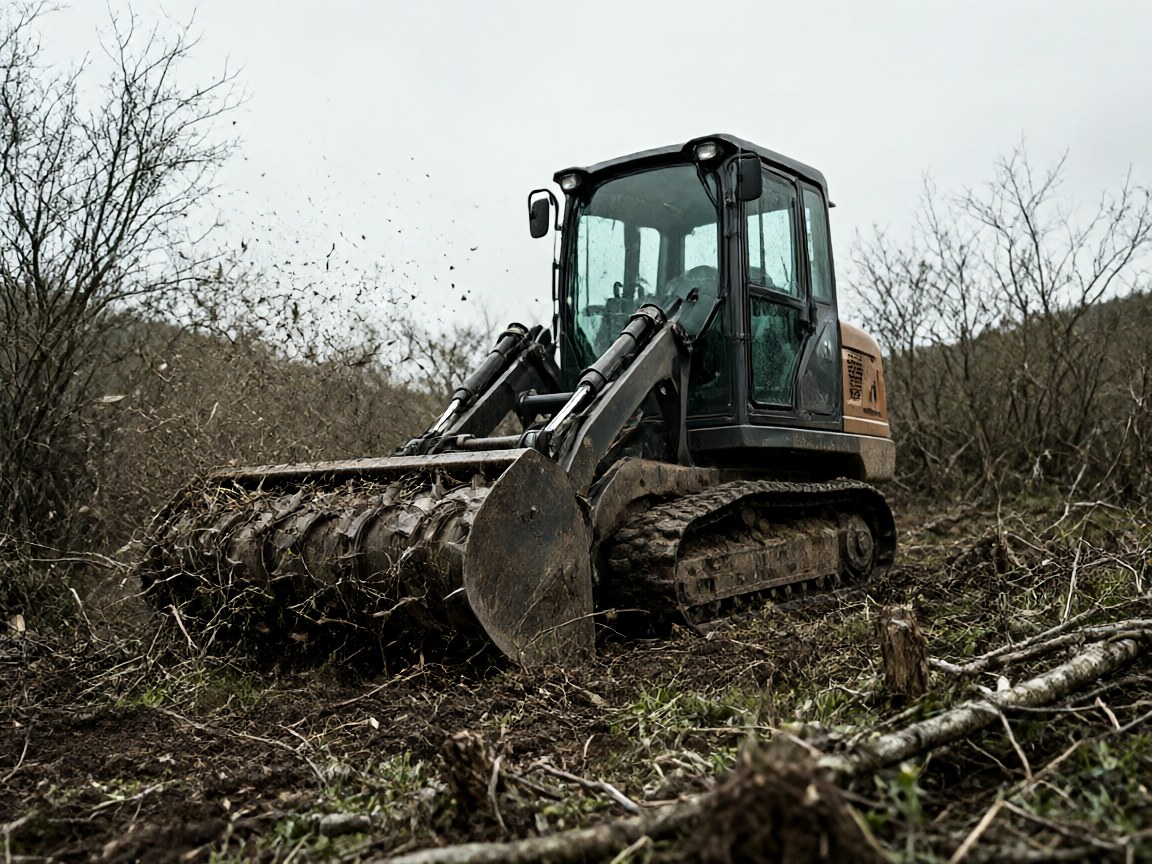
A clearing crew running a compact track loader with a 72-inch drum mulcher took a job on a rocky hillside. By lunch on the first day, four teeth had lost their carbide and the drum was out of balance. The operator had a spare set of hardened-steel teeth in the truck, but they were the wrong pattern for the drum, so the machine sat until the dealer opened. The job did not fail because the attachment was wrong. It failed because the spare teeth were.
Skid steer mulcher teeth are the cheapest part of a land-clearing operation and the one that decides whether the machine runs. The tooth has to match the attachment — drum or disc — and the material. This guide covers the two mulcher designs, the tooth types each one takes, how the fit is set by the carrier and attachment brand, and how to keep a spare set that actually bolts on.
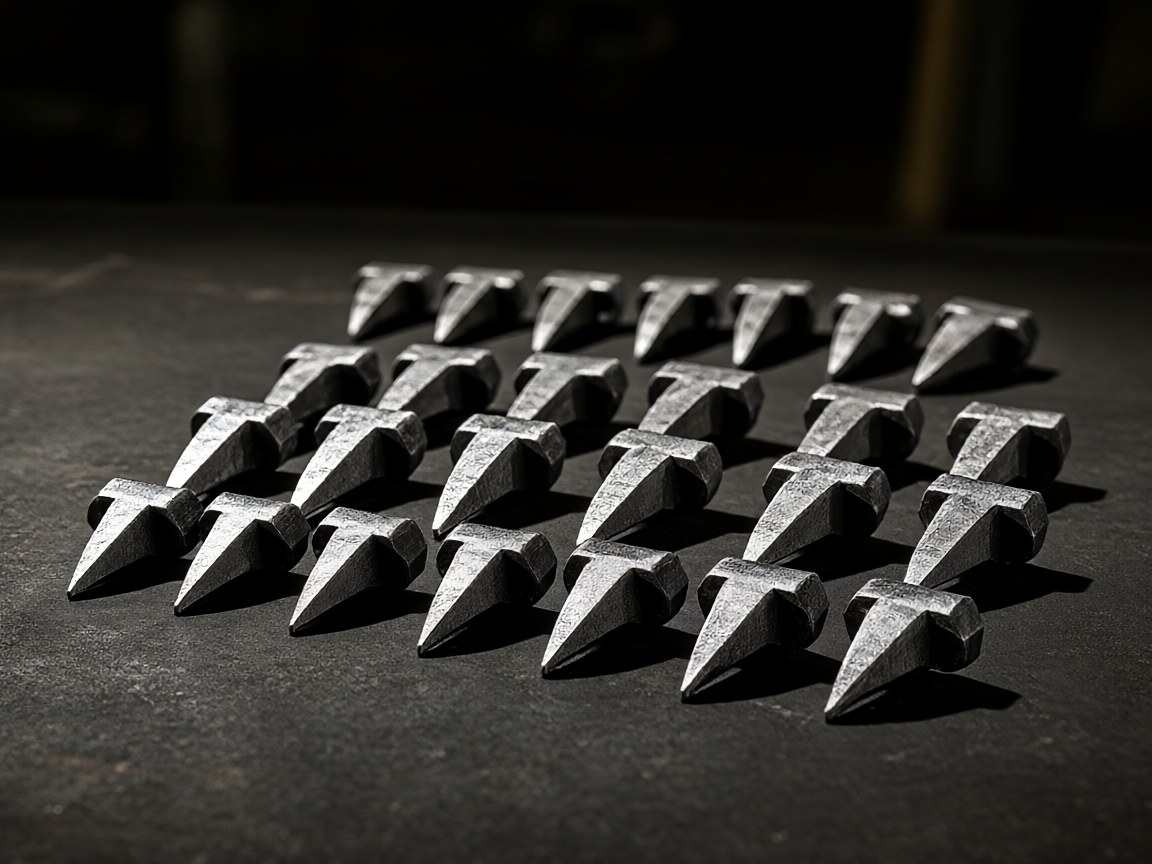
Drum or disc: why the teeth differ
A drum mulcher runs a horizontal drum with rows of tooth holders around its face. The teeth bite into the material against a counter-blade, and the drum spins fast enough to mulch rather than just chip. Because the teeth wrap around the drum, a drum mulcher tolerates ground contact and rocky terrain far better than a disc — the teeth that are not cutting are out of the dirt.
A disc mulcher runs a flat disc with cutting teeth on the outer edge and, on many designs, a second set of carbide teeth on the underside. The disc reaches higher and cuts faster in standing timber, but the edge teeth take the ground contact directly, so they wear harder on rocky jobs. The two designs do not share teeth, and a disc tooth will not seat in a drum holder.
That is the first question to settle before you order anything: which head is on the machine, and which position on the drum or disc is the tooth going into. Center teeth, edge teeth and side scrapers are usually different part numbers even on the same head.
The tooth types you will actually order
Across the drum and disc heads, the same few tooth families show up. Each is a different answer to how abrasive and how rocky the ground is.
Carbide-tipped teeth
A forged steel body with embedded tungsten carbide inserts. This is the long-life tooth for rocky ground, repeated ground contact and rental fleets, where the machine changes operators but the ground does not get kinder. Carbide teeth commonly run three to five times the life of a steel tooth in abrasive conditions, at a higher price per tooth.
Hardened-steel four-point teeth
A four-cornered hardened steel tooth used on disc mulchers and on the cutting edge of many drum heads. It is sharp, cheap and fast in clean wood, and it can be rotated to a fresh corner as each one dulls. It is the wrong tooth for rock — a corner rolls over in minutes.
Chisel and knife teeth
A knife-edge profile that slices cleanly through softwood and brush. It gives the best cut quality and the lowest power draw in clean material, and it dulls fast in dirty or dry hardwood.
Side scrapers and edge cutters
Left- and right-hand teeth that trim the edge of the cut and stop material bypassing the main teeth. They are separate part numbers and are usually replaced with the main teeth rather than on their own.
Rock-resistant teeth
The carbide-heavy step up from a standard carbide tooth, with more wear material between the steel body and the rock. For ground where stone is part of the job rather than an accident.
The practical mix most contractors settle on: carbide on the drum or disc positions that see ground contact, hardened steel on the clean cutting positions, and rock-resistant teeth on the jobs that keep finding stone.
How the fit is set — carrier, attachment and position
The carrier brand does not decide the tooth; the attachment does. A Bobcat loader can run a Bobcat mulcher, a Diamond Mowers head or an FAE head, and each takes a different tooth. That is why parts are ordered by attachment model and position, not by the skid steer model.
The common patterns are well documented. Bobcat drum mulchers use a carbide tool under part 46891817, disc mulchers take a four-point tooth under 7528205 and a carbide disc tooth under 7528307. Cat HM315C, HM415C and HM418C heads take the C/3 family, which also fits FAE C/3 rotors — our Caterpillar mulcher teeth guide covers that interchange in detail. Diamond Mowers heads take their own Twin Maul carbide and Edge hardened-steel teeth, and Loftness heads take a separate pattern again.
When you order, give us the attachment brand and model, the position (center, edge or side) and a photo of the holder with a ruler across it. That is enough to confirm the fit. The categories for the main brands are Bobcat mulcher teeth, Diamond Mowers mulcher teeth and Loftness mulcher teeth, and the full range sits under forestry mulcher wear parts.
Carbide or steel — when the price difference pays
A carbide tooth costs several times a steel tooth. The case for it is not the sticker price; it is the number of times the machine stops. On rocky ground and repeated ground contact, carbide teeth commonly last three to five times as long, which means fewer changes, fewer spare sets and less downtime on a job that is already paid by the day.
On clean brush and softwood, a hardened-steel four-point tooth cuts faster and costs less, and the four corners can be rotated before the tooth is scrapped. A contractor clearing clean pasture does not need carbide. A contractor clearing fence lines with buried stone does. Most profitable fleets run both and match the tooth to the job rather than standardising on one.
Maintenance that keeps teeth in the holder
Inspect the drum or disc at the start of every day. Clear packed material and mud from the drum and the side bearings, because a drum that is out of balance wears teeth unevenly and punishes the bearings. Check every tooth for missing carbide, cracked inserts and a loose bolt.
Replace damaged holders at the same time as the teeth. A worn holder lets the tooth move, and a moving tooth loses its edge and its bolt. On chisel-type teeth, sharpening is done on the top flat face only, following the maker’s angle — grinding the bevel changes the geometry and the power draw. Carbide teeth are not sharpened; they are replaced when the insert is gone.
When to replace skid steer mulcher teeth
Replace a tooth when the carbide is missing, when the cutting edge has rolled over and stopped cutting, or when the holder shows damage — not when the drum finally stops mulching. A missing carbide means the steel body is now the cutting edge, and it will wear the holder and the counter-blade while it does. That is the expensive failure.
What we build for mulching attachments
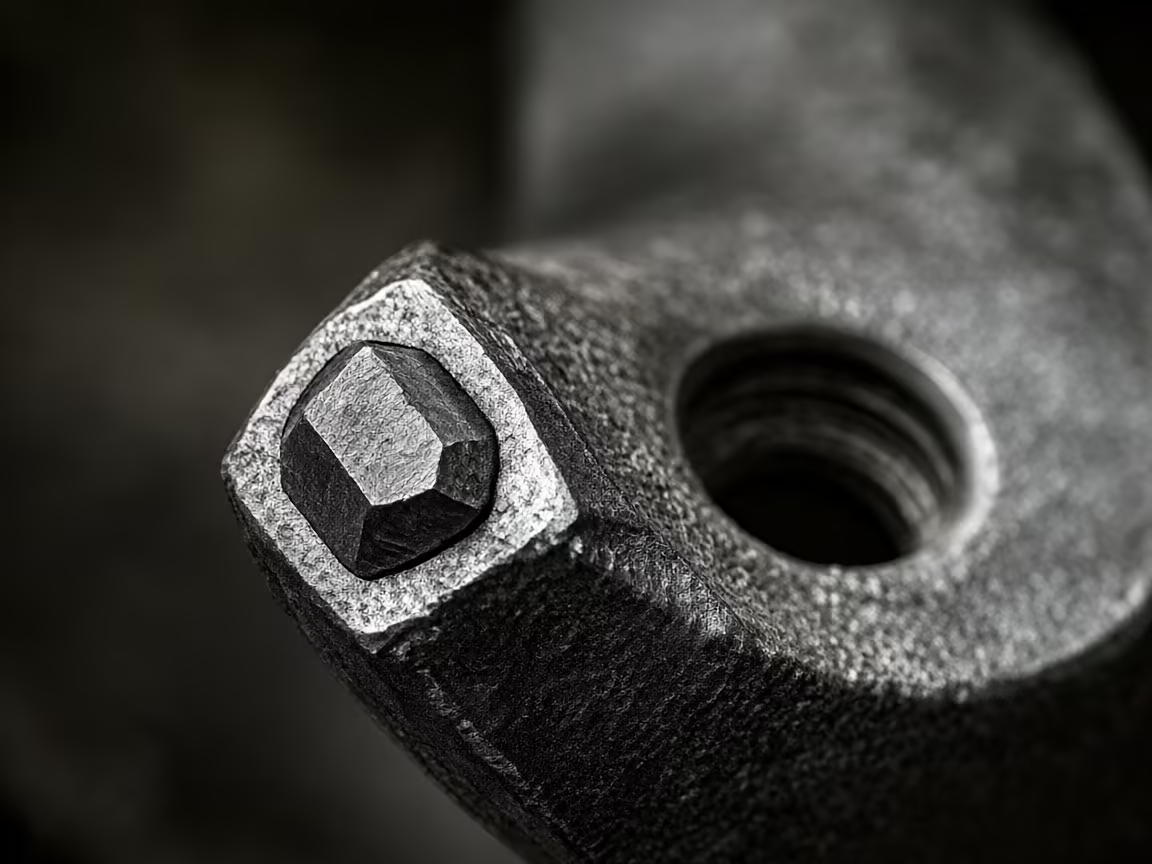
Our forestry mulcher wear parts are carbide-tipped replacement teeth for the main compact-track-loader mulcher heads. The BR-FM2034 carbide tooth for Bobcat mulchers is the carbide pattern for Bobcat forestry mulchers with embedded tungsten carbide tips and two thread positions, and the BR-FM2028 tooth for Loftness mulchers covers Loftness heads. Bodies are forged, carbide is brazed under controlled temperature, and each tooth is checked for seat depth and thread fit before packing.
The wider range, including the BR-FM2010 mulcher tooth, is in our forestry mulcher wear parts category. Monthly container shipments go to contractors, rental fleets and dealers worldwide, and mixed trial sets let you run carbide and steel on the same drum before committing a season to one.
Frequently asked questions
Related guides
- forestry mulcher teeth guide
- Caterpillar mulcher teeth guide
- Bandit Beast wear parts guide
- forestry mulcher wear parts range
- mulcher teeth installation and torque guide
- /loftness-mulcher-teeth-replacement-guide/
- Bobcat mulcher teeth fit guide
Are these genuine Bobcat, Cat or Diamond Mowers teeth?
No. Baurong is an independent aftermarket manufacturer. Every brand name on this page describes compatibility only and remains the property of its owner. Our teeth are dimensioned to the holder patterns those attachments use and checked against sample holders before production.
Will a drum mulcher tooth fit a disc mulcher?
No. Drum and disc heads use different teeth and different holders. Even within one head, center, edge and side-scraper positions are usually different part numbers. Tell us the attachment model and the position and we will confirm the right tooth.
Carbide or hardened steel for a skid steer mulcher?
Carbide for rocky ground, repeated ground contact, rental fleets and abrasive work; hardened steel for clean brush and softwood where cut speed and cost per tooth matter more. Many contractors run carbide on the ground-contact positions and steel on the clean cutting positions.
What lead time should I plan for mulcher teeth?
Standard patterns ship on our monthly container schedule, a few weeks including transit. Because a broken tooth can park a machine, most contractors keep one spare set on the shelf. Tell us your head model and monthly volume and we will size a standing order.
Tell us your attachment brand and model, the tooth position and the ground you are clearing, and we will confirm the fit before anything ships. Send a photo of the holder with a ruler across it if you are unsure. You can contact us or ask for a mixed trial set.
Related posts

AHWI and Prinoth Mulcher Knives: Types, Fit and Wear
AHWI and Prinoth mulcher knives explained: knife versus carbide hammer, the UPT and M-Class rotor families, how to identify the blade on your rotor, and how wear actually progresses on a knife edge.

Vermeer Stump Grinder Teeth: Wheel and Vertical Grinder Fit
Vermeer stump grinder teeth by machine layout: wheel versus vertical grinders, the tooth styles each one takes, how to read wear, and how to match a replacement by dimension instead of by part number alone.

Bobcat Mulcher Teeth: Drum and Disc Fit, Wear and Replacement
Bobcat mulcher teeth differ between drum and disc heads. What the OEM part numbers map to, how the BR-FM2034 replacement fits, the two 1/2 inch UNF threads that decide it, and when a tooth is finished.

Haybuster and Duratech Grinder Teeth: A Fit and Wear Guide
Tub grinder teeth for Haybuster and Duratech machines: how tub and horizontal grinders load their hammers differently, the severe duty replacement that fits both, wear signs, and how to match a tooth by dimension.

Denis Cimaf DCC-301 and DCH-303: Tooth, Holder and Fitment Reference
How to read the Denis Cimaf part numbering for mulcher teeth and holders, what DCC-301 and DCH-303 actually are, how to check wear on the tooth and the holder, and how to order the right replacement by dimension.