
A tree service running two Vermeer grinders — a towable wheel machine and a self-propelled vertical grinder — keeps one parts bin and wonders why half the teeth in it fit neither machine properly. The two layouts load and mount teeth completely differently, and the tooth that survives on one is the wrong shape for the other.
Vermeer stump grinder teeth are a large aftermarket family precisely because Vermeer built so many machines over so many years. This guide covers the two machine layouts, the tooth styles that correspond to them, how wear shows up, and the measurement routine that avoids buying a set that does not fit. For the general replacement logic see our stump grinder teeth replacement guide.
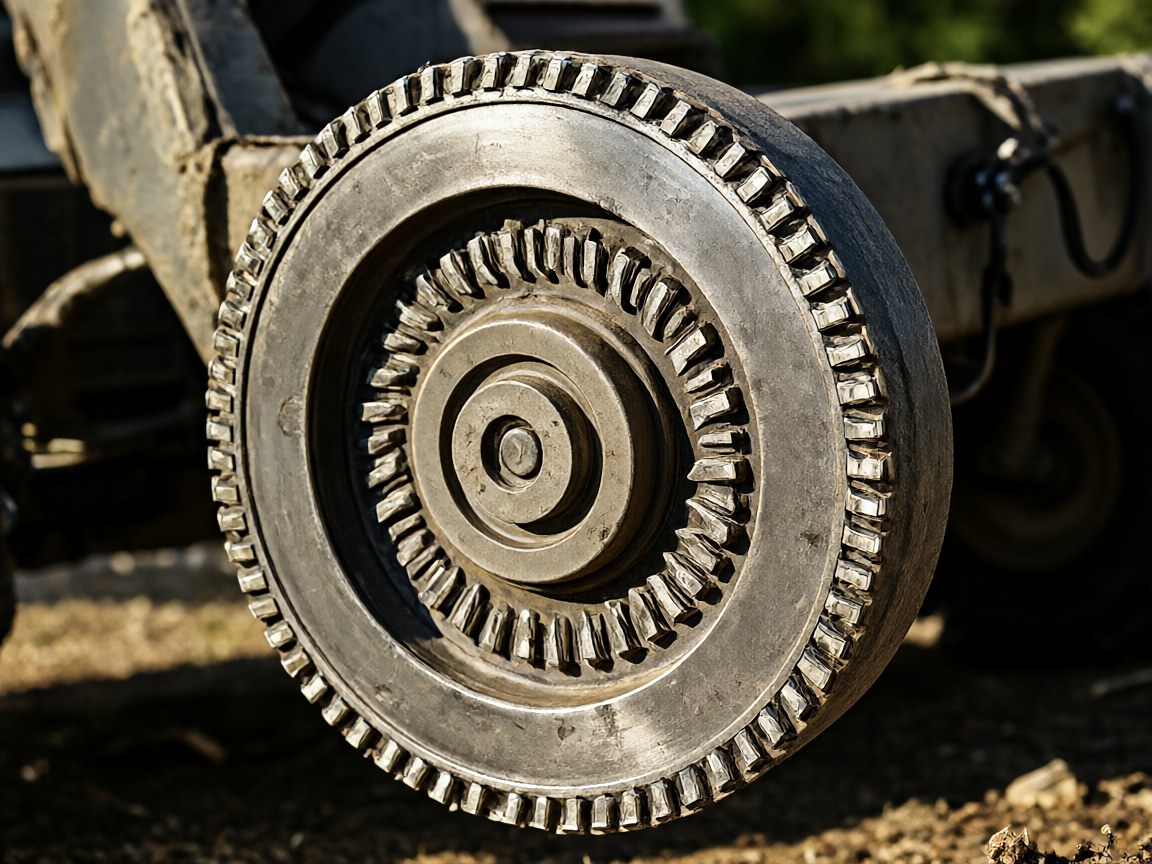
Wheel grinder versus vertical grinder
- Wheel grinders (the towable SC-series layout) cut with a rotating wheel that sweeps through an arc. Teeth are bolted around the wheel rim, and each tooth takes an interrupted cut — impact plus abrasion, with the whole cutting load concentrated on a few teeth at a time.
- Vertical grinders (self-propelled and track machines) use a vertical cutter wheel that engages the stump across its full height. The teeth see more continuous contact and more side load, and the tooth geometry is shaped for that.
- Practical result: tooth spacing, holder angle and bolt pattern differ. The fastest way to waste money is to order “Vermeer teeth” without confirming which layout is on the machine.
The three tooth styles you will see
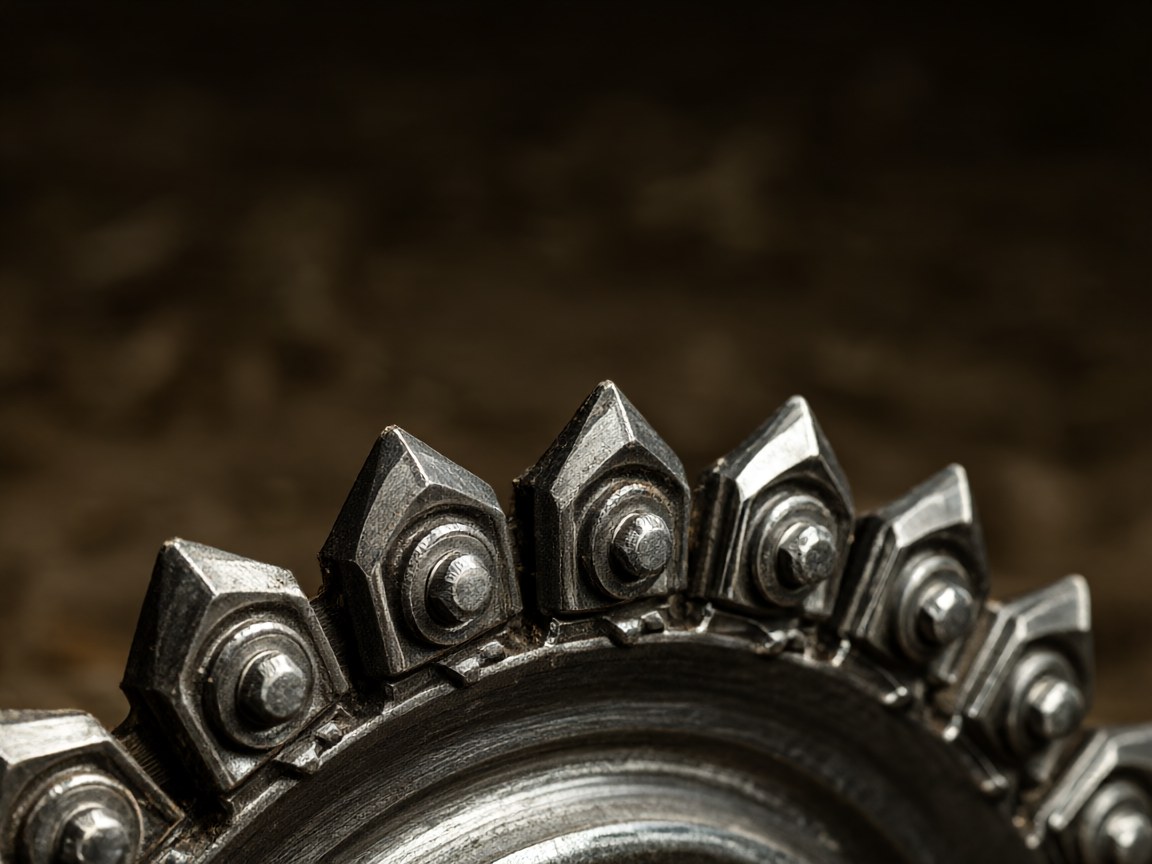
Across the Vermeer aftermarket, three families cover most of the demand:
- Bolt-on carbide teeth — a steel body with a brazed carbide insert, retained by a single bolt. The workhorse style; replace when the carbide is flat or chipped.
- Greenteeth-style and similar reversible systems — a small indexable tooth that can be rotated to a fresh edge before replacement, used on many later machines and popular as an upgrade.
- Quadco-style and heavy duty teeth — larger bodies for high-horsepower machines and for grinding stumps with embedded stone or metal.
Mixing styles on one wheel is possible but should be deliberate: keep the same style and the same wear level around the wheel, or the wheel will cut unevenly and vibrate.
Reading wear on stump grinder teeth
- The carbide edge rounds over and the tooth starts to polish the wood instead of cutting it — grinding time per stump climbs before the tooth looks “worn out”.
- The carbide chips. Once chipped, the steel body wears fast and the holder starts to take load.
- The bolt hole elongates. At that point the tooth is moving on the wheel, and the holder is next.
- The wheel starts to vibrate or the cut wanders. Check for a missing or broken tooth before looking at bearings.
Replace at the first stage. A stump grinder is a productivity machine: a set of dull teeth costs more in labour hours and fuel than the teeth cost to replace.
Matching a replacement by dimension
- Measure the body: overall length, width, thickness, and the distance from the bolt hole centre to the cutting edge.
- Measure the bolt: diameter, thread pitch and length.
- Note the wheel diameter and the number of teeth on it.
- Photograph the tooth from three angles with a ruler, plus the wheel with one tooth removed.
- Send the machine model and serial if legible.
BauRong’s grinder tip range covers the common body sizes and bolt patterns, including larger bodies up to about 133 × 62 × 82 mm and 2.9 kg for high horsepower machines — see the grinder tip product range. Teeth are hot-forged from alloy steel, vacuum heat treated and brazed with YG8 or YG11C carbide, and machined to the original seating so no wheel modification is needed.
Torque and seating
Most stump grinder tooth failures that are not carbide wear are seating failures: a dirty pocket, a stretched bolt or a missing spring washer. Clean the pocket, fit new hardware, torque to the machine specification, and re-check after the first few hours of work. The full procedure, including the run-in retorque and the rotation schedule, is in our mulcher teeth installation and torque guide.
Vermeer is a trademark of its owner, used here for compatibility identification only. BauRong teeth are independent aftermarket replacements. Send the machine model and tooth measurements — contact us for a quotation within 24 hours.
Related guides
- stump grinder teeth replacement guide
- Morbark grinder teeth guide
- Diamond Z grinder teeth guide
- mulcher teeth installation and torque guide
- grinder tip product range
Frequently asked questions
Do wheel grinders and vertical grinders use the same teeth?
No. The two layouts have different tooth spacing, holder angles and bolt patterns, so a tooth that fits a towable wheel machine will not necessarily fit a vertical self-propelled grinder. Confirm the machine layout before ordering.
How long do Vermeer stump grinder teeth last?
It depends on the ground and on how much grit the stumps carry. On clean stumps a carbide tooth can run 40 to 100 hours; on sandy or stony ground it can be finished in 10 to 20. Track hours per tooth position and rotate to spread wear.
Can stump grinder teeth be sharpened?
Steel teeth can sometimes be ground back, but carbide-tipped teeth should be replaced once the insert is flat or chipped — grinding the steel under the insert removes its support. Reversible systems are instead rotated to a fresh edge.
Why do my stump grinder teeth keep breaking in the same spot?
Repeated failure in one position almost always means the holder or wheel pocket is worn, so the tooth rocks instead of seating. Check the pocket for polishing, ovality and cracks before fitting another tooth.
Related posts

AHWI and Prinoth Mulcher Knives: Types, Fit and Wear
AHWI and Prinoth mulcher knives explained: knife versus carbide hammer, the UPT and M-Class rotor families, how to identify the blade on your rotor, and how wear actually progresses on a knife edge.

Vermeer Stump Grinder Teeth: Wheel and Vertical Grinder Fit
Vermeer stump grinder teeth by machine layout: wheel versus vertical grinders, the tooth styles each one takes, how to read wear, and how to match a replacement by dimension instead of by part number alone.

Bobcat Mulcher Teeth: Drum and Disc Fit, Wear and Replacement
Bobcat mulcher teeth differ between drum and disc heads. What the OEM part numbers map to, how the BR-FM2034 replacement fits, the two 1/2 inch UNF threads that decide it, and when a tooth is finished.

Haybuster and Duratech Grinder Teeth: A Fit and Wear Guide
Tub grinder teeth for Haybuster and Duratech machines: how tub and horizontal grinders load their hammers differently, the severe duty replacement that fits both, wear signs, and how to match a tooth by dimension.

Denis Cimaf DCC-301 and DCH-303: Tooth, Holder and Fitment Reference
How to read the Denis Cimaf part numbering for mulcher teeth and holders, what DCC-301 and DCH-303 actually are, how to check wear on the tooth and the holder, and how to order the right replacement by dimension.