
A contractor picks up a used Bobcat drum mulcher at auction, orders a set of teeth against the attachment model, and half of them will not seat. The head had been through a rotor revision, and the teeth on the machine were for the earlier layout. This is the most common — and most avoidable — mistake with Bobcat mulcher teeth.
Bobcat runs two mulcher attachment families with different tooth behaviour, and the part numbers on the attachment parts pages do not always tell you which rotor you have. This guide covers the drum and disc layouts, the replacement that fits the common drum rotor, the thread specification that decides fitment, and how to inspect a tooth that is on its way out. For the attachment-level comparison see our skid steer mulcher teeth guide.
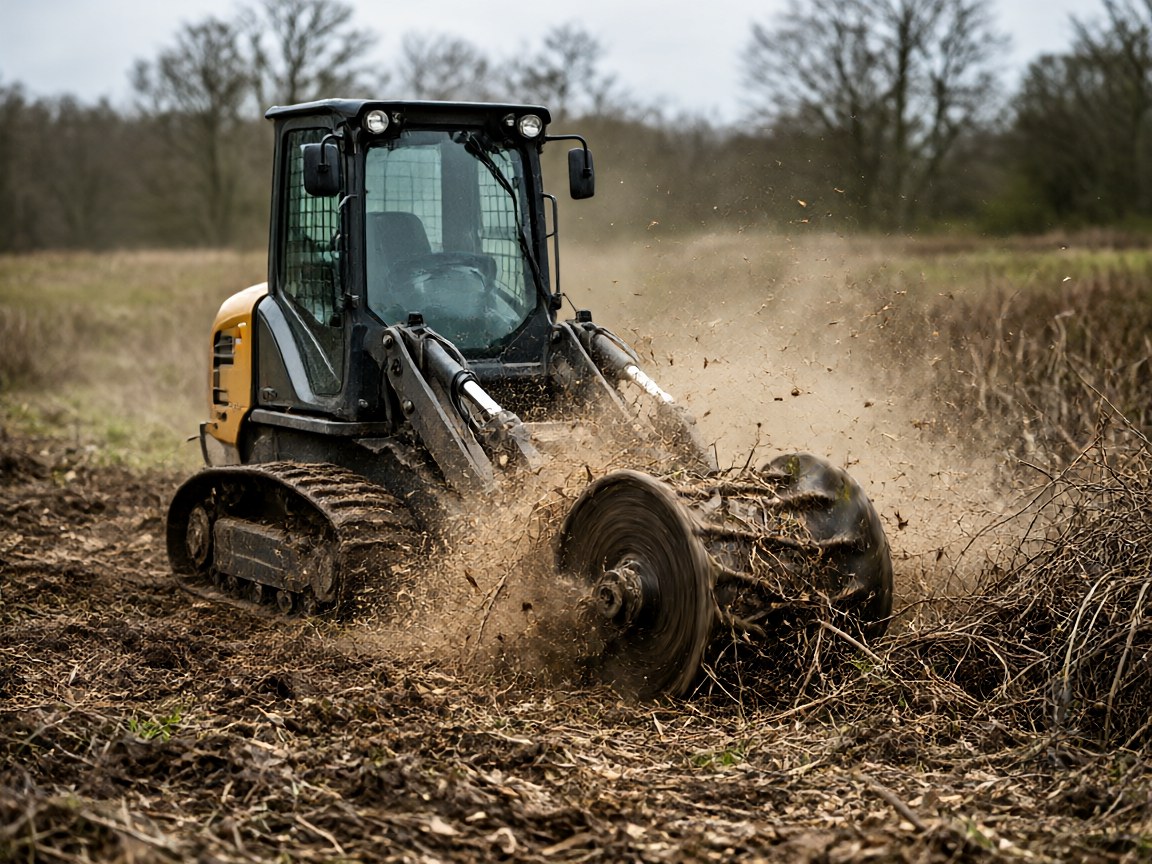
Drum mulcher or disc mulcher — the teeth are not the same
Bobcat sells both, and the difference is structural rather than a matter of part numbers:
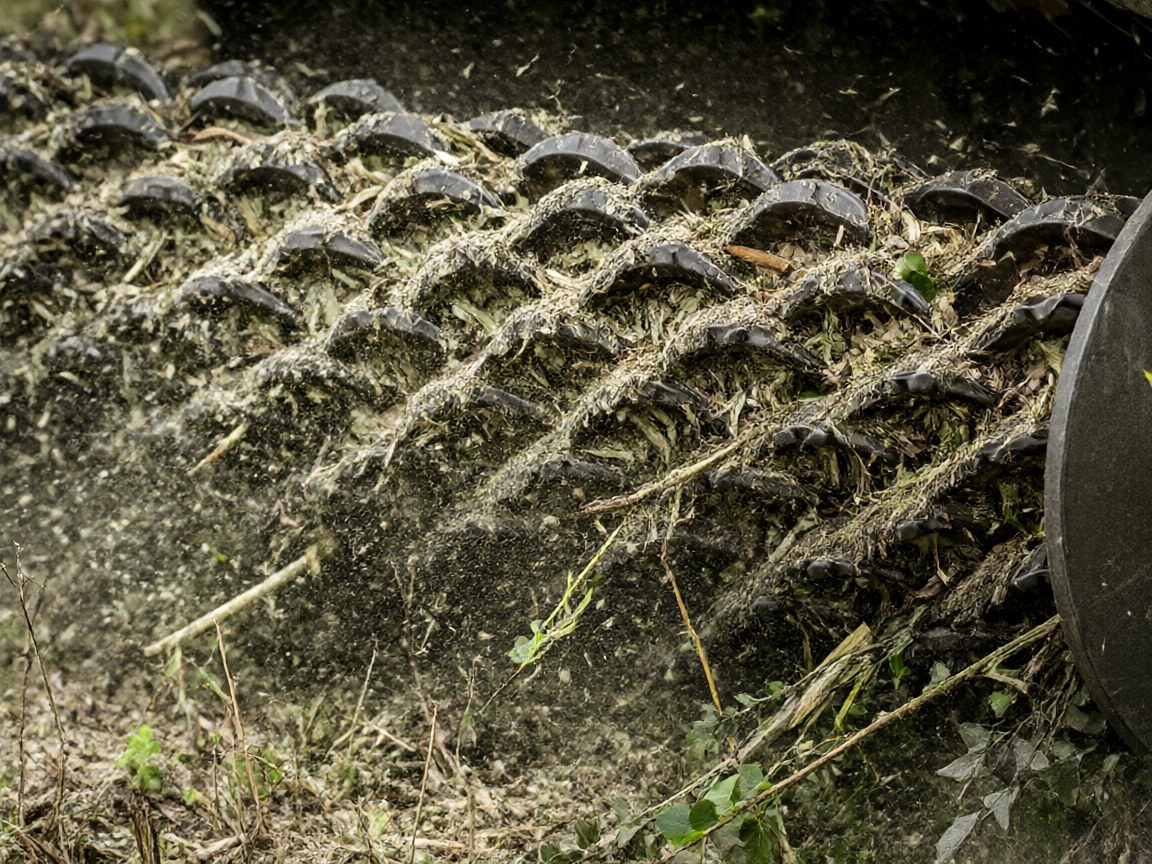
- Drum mulcher — a horizontal drum with rows of tooth holders. Teeth wrap the drum, so on ground contact only the teeth in the dirt are loaded. This is why drum heads tolerate rocky terrain and ground level work better.
- Disc mulcher — a flat disc with teeth on the outer edge and, on some designs, carbide teeth on the underside. The disc reaches higher and cuts faster in standing timber, but the edge teeth take ground contact directly and wear harder on rocky ground.
- The consequence — a disc tooth will not seat in a drum holder. Confirm the head first, then the position on the drum or disc.
BR-FM2034 — the drum mulcher replacement
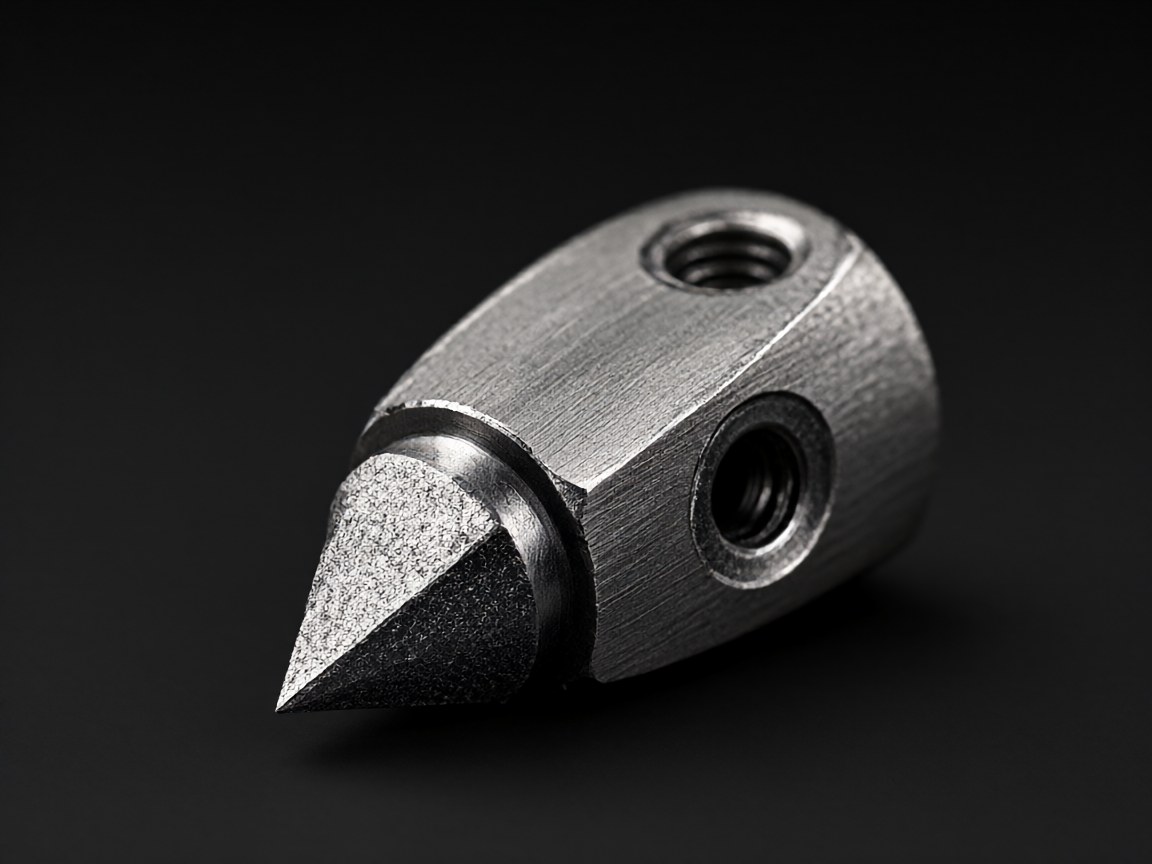
The BR-FM2034 Bobcat replacement tooth is a carbide-tipped tooth for Bobcat forestry mulchers with embedded tungsten carbide tips and two 1/2 inch UNF fine threads. It is the standard version, designed for universal use including ground level mulching, and replaces OEM part 300-60-008. Body 83.8 × 46.5 × 49 mm, 1.2 kg.
Two 1/2 inch UNF threads is the detail worth checking against the machine in front of you. Bobcat has used other thread sizes on other attachment families, and a tooth that looks identical will not pull down on the wrong thread.
OEM parts versus aftermarket
For a machine still under warranty, OEM parts are the safe route and the OEM parts catalogue is the reference for what the machine was built with. Once the warranty is past, the question is whether an aftermarket tooth is dimensionally identical and metallurgically sound. Three things to verify:
- the mounting face and thread match the holder exactly;
- the carbide is brazed, not glued or pressed, with no voids at the joint;
- the body is forged and heat treated, not cast.
Bobcat is a trademark of its owner. BauRong teeth are independent aftermarket replacements, identified by compatibility with the part number and by dimension.
Inspecting a Bobcat mulcher tooth
- Carbide flat to the steel, or chipped at a corner → replace.
- Body mushroomed at the leading edge → replace; the hammering is now going into the holder.
- Thread damaged or the tooth will not pull flat on a clean seat → check the holder before ordering another tooth.
- Missing or wrong spring washer → the tooth will loosen regardless of how well it was torqued.
The torque values, the run-in retorque at 4–8 hours and the rotation schedule for drum teeth are all in our mulcher teeth installation and torque guide — they are the difference between a set that runs its full life and one that loses teeth in the first week.
Rotation pays for itself
On a drum mulcher the teeth at the discharge side and at the drum ends wear first. Rotating positions at each service interval, rather than replacing tooth by tooth as they fail, typically adds 30–50 percent to the life of a set — with no extra parts and no extra cost beyond an hour of labour.
BauRong has forged and machined wear parts for forestry, agriculture and mining since 2009. The Bobcat-compatible range is on the Bobcat-compatible mulcher teeth, and the broader forestry range on the forestry mulcher wear parts range. Send the attachment model, the original part number or a photo of the tooth with a ruler and we will confirm the match — contact us for a quotation within 24 hours.
Related guides
- skid steer mulcher teeth guide
- Caterpillar mulcher teeth guide
- mulcher teeth installation and torque guide
- forestry mulcher teeth guide
- Bobcat-compatible mulcher teeth
Frequently asked questions
Will the same tooth fit a Bobcat drum and disc mulcher?
No. Drum and disc mulchers use different tooth layouts and holders, and a disc tooth will not seat in a drum holder. Confirm which attachment is on the machine before ordering, then confirm the position on the drum or disc.
What does the BR-FM2034 replace?
It is a replacement for OEM part 300-60-008 on Bobcat forestry mulchers: a carbide tipped standard tooth with two 1/2 inch UNF fine threads, 83.8 × 46.5 × 49 mm, 1.2 kg, suitable for universal use and ground level mulching.
How do I know which Bobcat mulcher teeth my machine takes?
Start from the attachment model, then verify with the thread size and the body dimensions. Bobcat has run several rotor revisions and thread sizes across attachment families, so a photo of the tooth next to a ruler plus the mounting face is the reliable confirmation.
Can I use aftermarket teeth on a Bobcat mulcher under warranty?
While the machine is under warranty, OEM parts are the safe choice. After that, an aftermarket tooth is a reasonable option provided the mounting face and thread match exactly, the carbide is properly brazed, and the body is forged and heat treated. Bobcat is a trademark of its owner.
Related posts

AHWI and Prinoth Mulcher Knives: Types, Fit and Wear
AHWI and Prinoth mulcher knives explained: knife versus carbide hammer, the UPT and M-Class rotor families, how to identify the blade on your rotor, and how wear actually progresses on a knife edge.

Vermeer Stump Grinder Teeth: Wheel and Vertical Grinder Fit
Vermeer stump grinder teeth by machine layout: wheel versus vertical grinders, the tooth styles each one takes, how to read wear, and how to match a replacement by dimension instead of by part number alone.

Bobcat Mulcher Teeth: Drum and Disc Fit, Wear and Replacement
Bobcat mulcher teeth differ between drum and disc heads. What the OEM part numbers map to, how the BR-FM2034 replacement fits, the two 1/2 inch UNF threads that decide it, and when a tooth is finished.

Haybuster and Duratech Grinder Teeth: A Fit and Wear Guide
Tub grinder teeth for Haybuster and Duratech machines: how tub and horizontal grinders load their hammers differently, the severe duty replacement that fits both, wear signs, and how to match a tooth by dimension.

Denis Cimaf DCC-301 and DCH-303: Tooth, Holder and Fitment Reference
How to read the Denis Cimaf part numbering for mulcher teeth and holders, what DCC-301 and DCH-303 actually are, how to check wear on the tooth and the holder, and how to order the right replacement by dimension.