
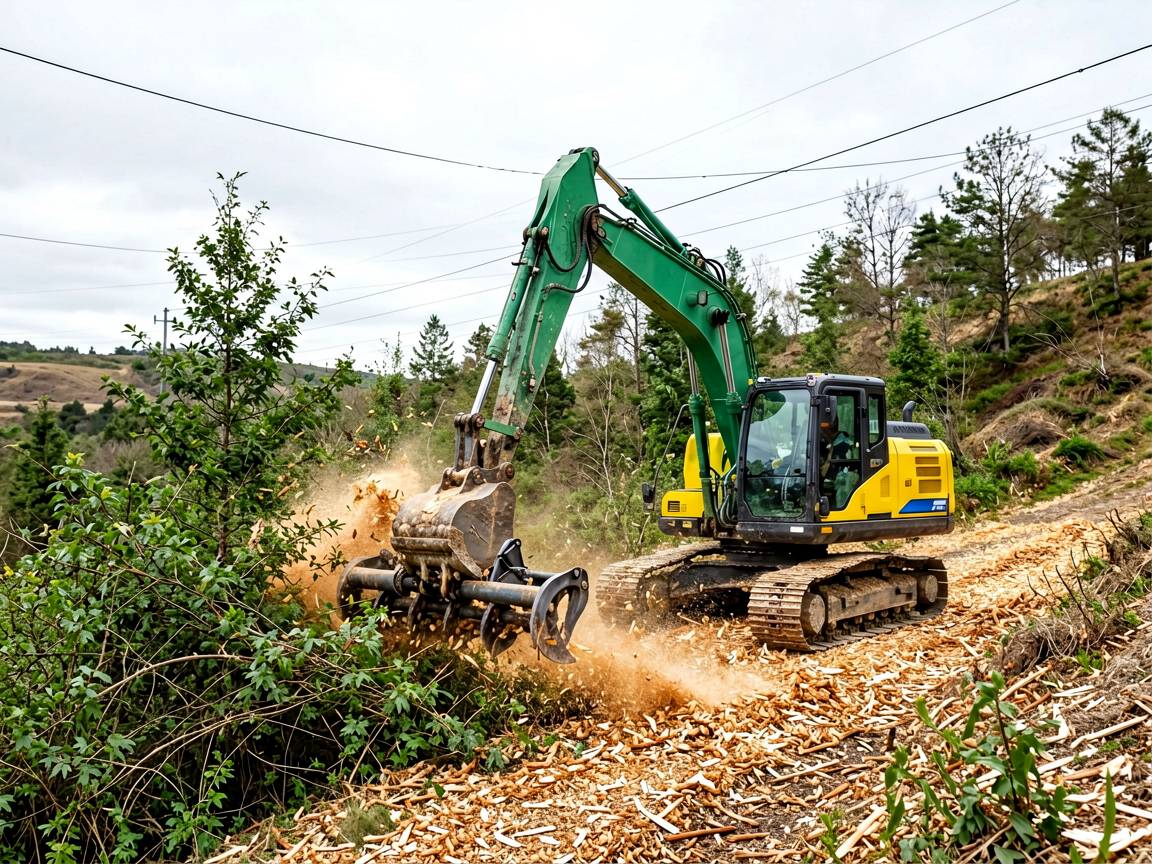
FAE mulching heads hold their value better than almost anything else in the land clearing business, and for good reason. The weak point is not the machine. It is a row of steel teeth spinning against rocks, sand and hardwood, and those teeth are designed to be consumed. We manufacture aftermarket FAE mulcher teeth in our Wenzhou factory, and most of the questions that reach our sales inbox come down to the same three things: which model do I have, which tooth fits it, and how do I change them without ruining the rotor.
This guide answers those questions in order.
Step one: know which FAE mulcher you actually have
FAE has built mulching heads for decades, and the used market is full of older machines still earning. The model family matters because the rotor and tooth system differ between them. The main families you will meet:
- UML – the light line for skid steers and compact carriers, from the 125 up through the 200 series.
- UMM – the mid range, popular on 100-200 hp carriers.
- UMH – the heavy line for excavators and large tractors, built for continuous forestry work.
- SFL and STCL – flail and stone crusher lines where the tooling differs from the drum mulchers.
You do not need to guess. Every FAE head carries a identification plate with the model and serial number, usually on the frame near the mounting points. Photograph that plate before you order anything. It saves a round trip.
The C/3 rotor and its teeth
Most UML, UMM and UMH mulchers in the field run the C/3 rotor system. It accepts three main tool types, and knowing which one your rotor wears is the second thing to confirm:
- C/3 carbide teeth – the standard fixed tooth with a tungsten carbide tip. Best all-round choice for mixed conditions, and the most common replacement we ship.
- C/3 one-piece knives – a sharpened steel blade instead of a carbide point, used where a cleaner cut matters more than rock tolerance.
- C/3 MAX carbide teeth – an oversized carbide version for abrasive, high-wear applications.
Two more wear parts live on the same rotor and get ignored until they fail: the counter blades (the fixed knives the teeth cut against) and the side cutters at the rotor edges. Replacing teeth on a worn counter blade is false economy. The new tooth meets a dull anvil and wears twice as fast.
Reading an FAE part number
Original FAE teeth carry a stamped part number, and the pattern is easy to work with once you have seen a few. The C/3 carbide tooth is commonly listed as 111530017, the one-piece knife as 112800126, and the C/3 MAX carbide as 112800148. Counter blades and side cutters follow the same numbering system.
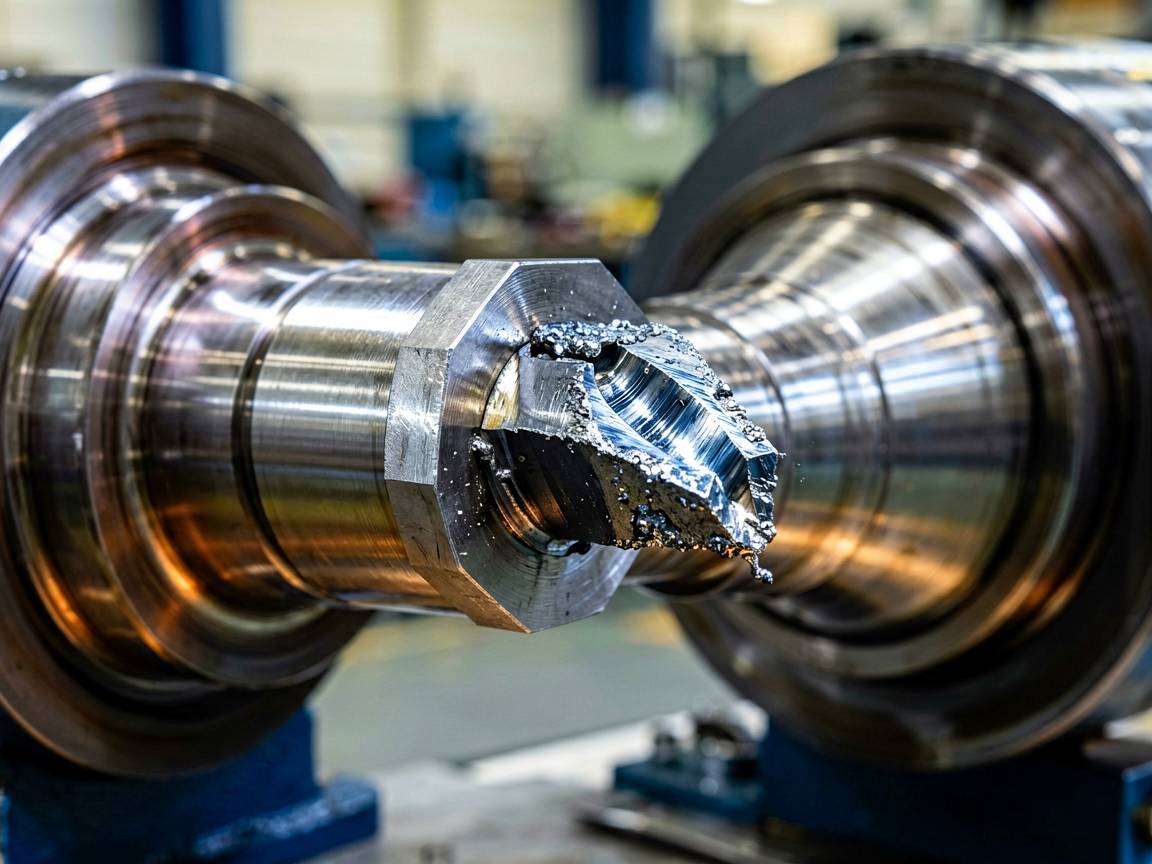
If the stamping is worn off, which it often is, measure the tooth and photograph it next to a ruler. Length, width at the seat, bolt diameter and carbide position tell us most of what we need. Our engineers match it against the original specification and confirm before quoting.
How many teeth do you need?
Rotor counts vary by head width and configuration, so take a number from your parts book or count the positions on your own rotor. Whatever the count, replace teeth as complete sets across each spiral. A rotor running four new teeth among twelve worn ones loads the new teeth with most of the work, and they fail early. Full-set replacement also keeps the rotor balanced, which matters more as rotor speed climbs.
Changing teeth without wrecking the holders
The holder, sometimes called the pocket or tool holder, outlives many sets of teeth but not forever. Before bolting in a new tooth:
- Clean the seat. Packed dirt and rust prevent full contact, and the tooth then rocks and breaks its own bolt.
- Check the seat surface for wear grooves. A holder worn out of tolerance will not hold a new tooth square, no matter how good the tooth is.
- Tighten to spec with a torque wrench, working around the rotor in a pattern.
A holder costs several times what a tooth costs, but a rotor full of worn holders costs far more. Five minutes of inspection per change pays for itself.
What to look for in aftermarket FAE teeth
The aftermarket for FAE teeth is large, and quality spans the full range. The differences that matter are boring but decisive: a forged body rather than a cast one, carbide brazed under controlled temperature rather than glued on hope, and dimensions held by CNC machining rather than sorted by eye. Ask any supplier whether they forge and braze in-house. A real manufacturer answers immediately.
Our FAE mulcher teeth range covers the C/3 carbide tooth, the one-piece knife and heavy-duty variants for UML, UMM and UMH rotors – for example the BR-FM2003 and BR-FM2007 for standard carbide positions, and the BR-FM2018 and BR-FM2024 for other common fitments. Every tooth ships with material traceability back to its steel batch.
One clarification we always make: these are independent aftermarket replacements, not original FAE parts. FAE and the model names above belong to their owner and are used here only to identify compatibility.
Questions we get asked
How long do FAE mulcher teeth last?
Clean grass and brush: several days of work per set. Rocky ground or sandy soil: plan on replacing every day or two. The soil does most of the wear, so track hours per set on your own jobs and budget from your own numbers, not someone else’s.
Can I fit carbide teeth on a rotor that ran knives?
Usually not, and it is worth checking before you try. Blade-style and carbide-style rotors differ in tool seats and counter blades. Converting between them is a workshop job, not a field swap. Send us photos of your rotor and we will tell you what it actually takes.
Do you supply holders and counter blades as well?
Yes. Our FAE-compatible line includes tool holders, counter blades and side cutters, and we also produce them to customer drawings under OEM programs. If the wear part on your rotor has a number on it, we can almost certainly match it.
What is the minimum order?
A single set is fine for a first trial. Most crews order a spare rotor set at a time; dealers and rental fleets order by the carton. Either way, confirm fitment first – send the model plate photo through our contact page and we reply within 24 hours.
Worn FAE teeth are a small problem that gets expensive when it is ignored. If your head is due for a set, browse our FAE mulcher teeth range or send us your model plate and tooth photos for a same-day match. And if you also run a stump grinder, our guide to stump grinder teeth replacement covers the same ground for grinding wheels.
Related posts

Bandit Beast Wear Parts: A Practical Guide to Teeth, Cutterbodies and Rakers
A grinding contractor in Ohio added a second shift on his 3680XP to keep up with tear-off shingles, and his wear-parts bill doubled in a month. The teeth were not wearing out faster — he was simply ru...

Denis Cimaf Mulcher Teeth: A Replacement Guide for DAH and DAF Series
A land-clearing crew near Trois-Rivières was three days into a right-of-way job when the DAF-180E started leaving streaks of uncut brush. The operator pulled the head, and half the forged knives were ...

Chocky Bars: What They Are, Where to Use Them, and How to Choose
A quarry manager in Western Australia once told us his bucket rebuild budget was the only line item he could not predict. The lip would look fine at the monthly inspection, then lose six millimeters o...

FAE Mulcher Teeth: A Replacement Guide for UML, UMM and UMH Mulchers
FAE mulching heads hold their value better than almost anything else in the land clearing business, and for good reason. The weak point is not the machine. It is a row of steel teeth spinning against ...

Stump Grinder Teeth: When to Replace Them and How to Choose
Last month a tree service crew from Georgia sent us photos of their grinder. The machine had less than 800 hours on it, but the wheel was shaking so hard the operator refused to run it. They suspected...