
A municipal roadside crew in the Alps was losing a day a week to mulcher maintenance. Their M650m head was chewing through teeth on abrasive embankment slopes, and the replacements they ordered kept arriving with the right part number but the wrong bolt pattern. The fix was not a more expensive tooth — it was understanding which of the Prinoth mulcher teeth families their rotor actually takes. That distinction saves most contractors money on the very first order.
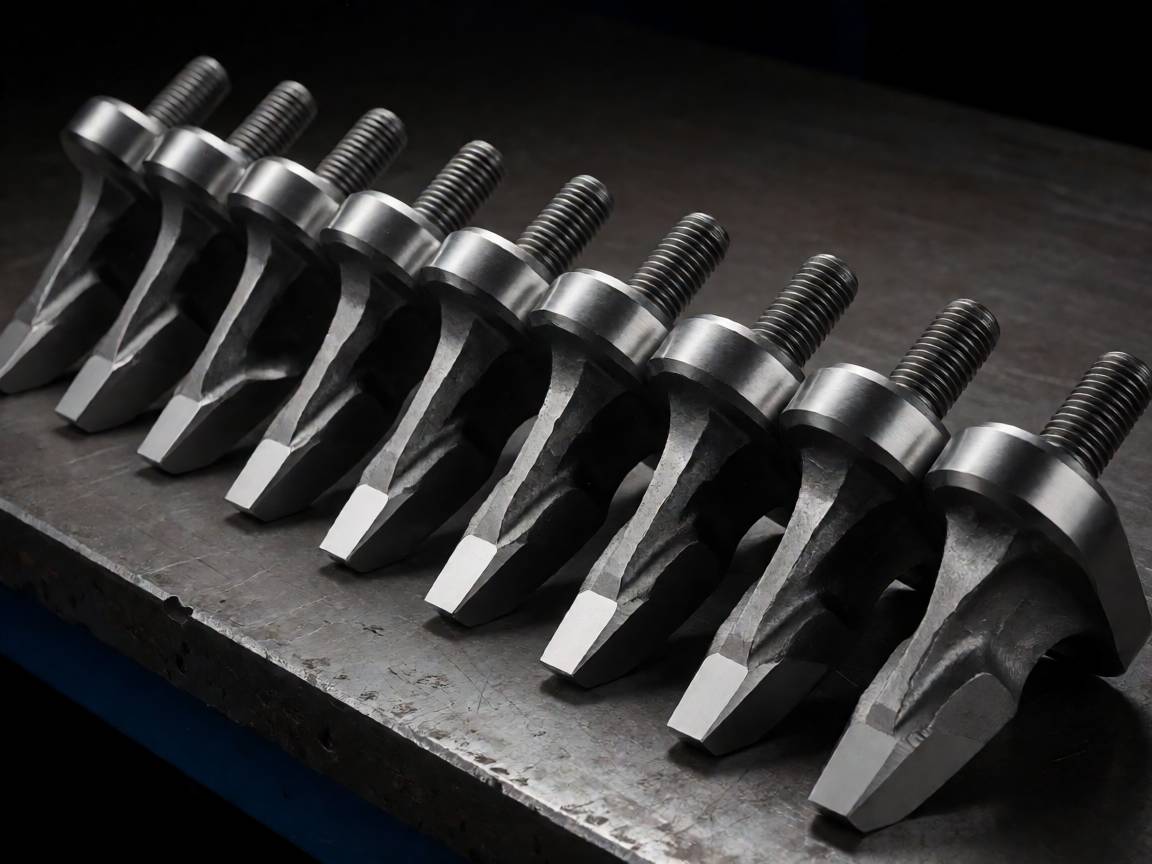
Know your head: UPT, M-class and Raptor families
Prinoth and AHWI heads divide into a few broad families, and the tooth standard differs between them. The UPT series is the universal mulching head line for carriers and excavators — the UPT02 and UPT09 carbide teeth that fit it are large, single-bolt, reversible tools, roughly 178 by 67 millimeters with a 24-millimeter mounting bolt. The M-class spans the M450 through M900 machines, where tooth counts scale with head width: an M450e-900 runs about 20 teeth, while a big M650m 2550 Turbo takes around 72. The Raptor line and RT-series attachments use their own patterns. None of these interchange, which is why the head model — not the carrier — decides what you order.
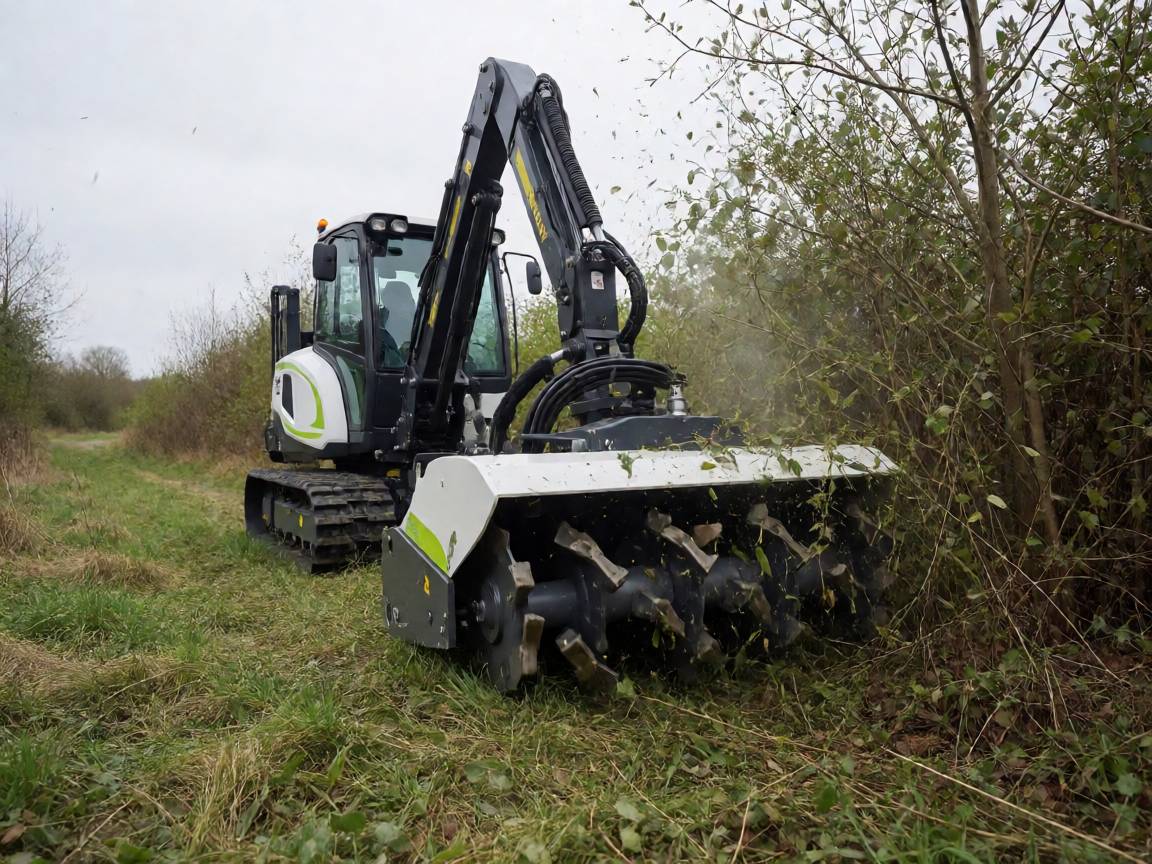
Mono, dual or triple carbide: match the layout to the ground
Single-carbide mono teeth are the right tool for grass, brush and general vegetation — they cut aggressively, cost the least and are easy to inspect. Dual-carbide and triple-carbide layouts add cutting edges and mass, which pays off in rocky soil, sandy ground and heavy hardwood where a single edge would round off in a day. The trade-offs are real: multi-carbide teeth cost more per piece, throw more vibration into the rotor, and can crack when they strike solid rock edge-on. On the UPT line the choice is formalized — the UPT09 is the standard reversible version and the UPT02 is the severe-duty version for ground-level mulching in rocky conditions. Most contractors stock both and swap by job, not by season.
Reading the OEM references
Aftermarket catalogs cross-reference the original AHWI and Prinoth numbering, and three references cover most of the market. UPT09 maps to the standard reversible UPT-series tooth. UPT02 is its severe-duty sibling. BCS03 is the triple-carbide hammer pattern used across the M450 to M650 range, mounted with two M16 bolts per tooth. Beyond the numbers, measure what matters: mounting bolt diameter and thread, center distances, overall length and width, and the carbide layout. If a supplier quotes from the part number alone and never asks for a measurement or a photo, treat that as a warning sign.
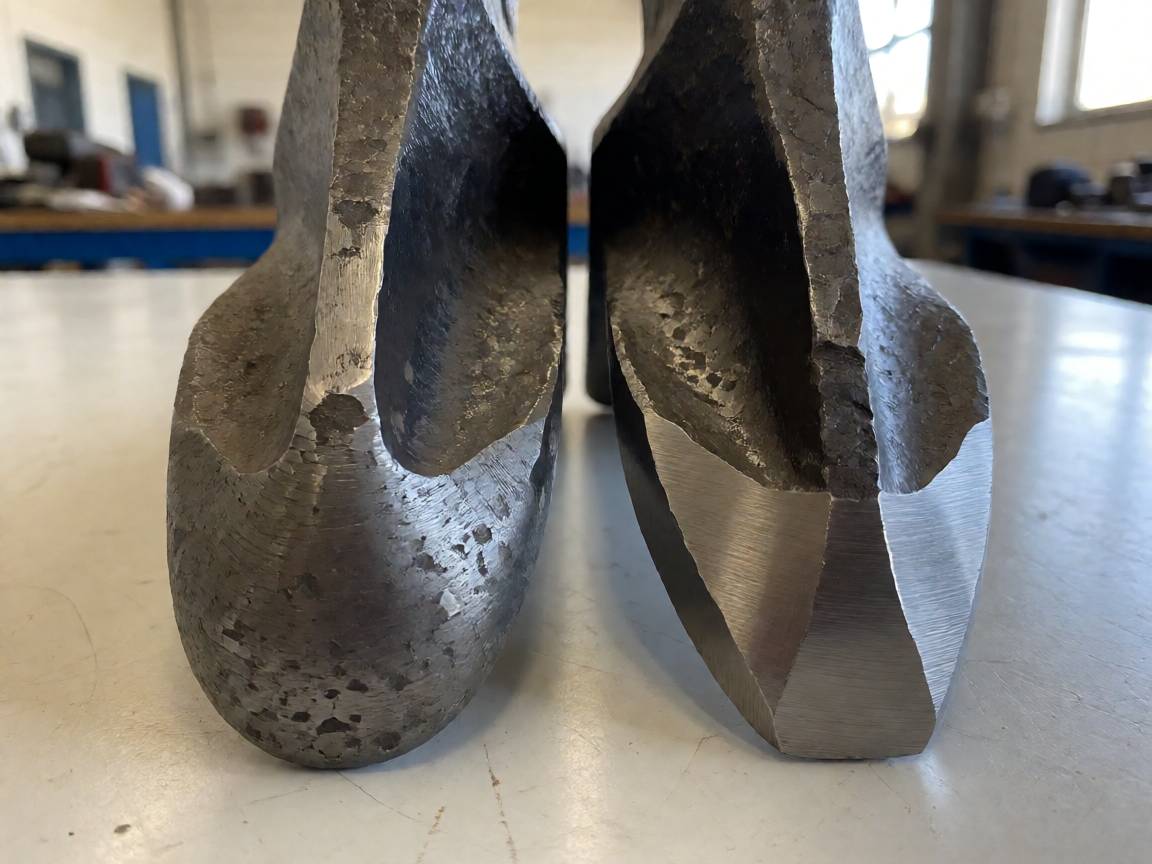
A five-minute fitment check before every order
Four inputs prevent nearly every wrong delivery: the mulcher head model from the nameplate, the rotor type if you know it, the OEM part number stamped on a worn tooth, and a photo of that tooth from two angles. With those, a competent supplier can confirm bolt length, seating geometry and carbide grade before quoting. Keep one worn tooth from every rotor in your workshop as a physical reference — it settles arguments faster than any catalog page.
What we supply for Prinoth and AHWI heads
Our Prinoth and AHWI-compatible mulcher teeth are aftermarket mono carbide teeth engineered to the original dimensions of these heads, from compact UPT attachments up to the M500, M700 and M900 series. Bodies are forged from 42CrMo alloy steel and vacuum heat treated, carbide is precision ground, and the design carries wear protection below the tip where abrasive soil eats ordinary teeth. Seating surfaces are CNC machined, so installation is direct fit with no rotor or holder modifications.
- BR-FM2009 mono carbide tooth for Prinoth UPT and M-class heads
- BR-FM2026 severe-duty carbide tooth for abrasive ground
Running a mixed fleet? The selection logic in our guides to FAE mulcher teeth and Denis Cimaf mulcher teeth follows the same pattern: identify the head, match the carbide layout to the ground, and verify dimensions before ordering.
Frequently asked questions
Are your Prinoth teeth original OEM parts?
No. We manufacture independent aftermarket replacements engineered to the original dimensions. Prinoth, AHWI and the model names on this page are trademarks of their respective owners, referenced for compatibility only.
How long do carbide Prinoth teeth last compared with steel?
In clean organic material the difference is modest. In rocky or sandy ground, carbide typically outlasts hardened steel by a factor of three to five, which is exactly the condition these heads are usually bought for. Rotation between positions roughly doubles the service interval.
Can I install replacement teeth myself?
Yes. Fixed-tooth rotors are designed for field service: one or two bolts per tooth, torque to spec, replace in a balanced pattern across the rotor. The jobs that need a shop are holder replacement and rotor rebuilding after a strike.
What is the minimum order for Prinoth pattern teeth?
Trial quantities are normal — one rotor set is a sensible start. Fleet and dealer supply programs are priced per annual volume, so it is worth telling us your expected consumption when you ask for a quote.
Send your head model, the original part number, or photos of a worn tooth from two angles — contact our team and we will confirm the matching replacement with pricing inside 24 hours.
Related posts

Snow Plow Cutting Edges: Steel, Carbide and What Fleets Should Buy
A county road department in the northern US ran out of cutting-edge life in the middle of a February storm. The soft edges on two plow trucks had worn back to the steel in four hours of hard plowing, ...

Cultivator Teeth and Points: How to Choose the Right Wear Part
A mixed farm in the US Midwest ran a six-metre stubble cultivator through a wet harvest season. By the third week the points had worn back enough that the tines were dragging soil instead of cutting i...

Morbark Grinder Teeth: Styles, Model Fit and How to Choose
A tree-waste processor in Oregon ran a Morbark 4600XL horizontal grinder through demolition wood that was mixed with rebar and concrete dust. The original teeth were gone in six weeks, and by the time...

Wood Grinder Wear Parts: A Guide for Peterson Pacific and Terex CBI Machines
A biomass yard in the Pacific Northwest was processing stumps, demolition wood and green waste through a pair of horizontal grinders, and their wear-parts spend was all over the map: cheap tips that d...
Seppi Mulcher Teeth: A Replacement Guide from MINIFORST to MAXISOIL
A forestry contractor maintaining forest roads in the Dolomites burned through a season's budget of teeth in eight weeks. His MIDIFORST dt was doing the work of two machines — mulching brush one week,...