
A county road department in the northern US ran out of cutting-edge life in the middle of a February storm. The soft edges on two plow trucks had worn back to the steel in four hours of hard plowing, and every change cost them one to two hours of road time with two or three people on the tools. By the time the storm ended, the trucks had spent more time in the shop than on the road. The following season they moved to carbide-insert edges on the primary routes and kept steel on the back roads. Blade costs went up. Plowed miles per dollar went down.
That is the whole decision in one sentence: a snow plow cutting edge is a wear part, and the right one is set by the road surface, the plowing hours and what a change costs your fleet in lost time. This guide covers the blade types, the real durability numbers from state DOT field studies, when carbide is worth three times the price, and how to match an edge to your plow, grader or loader.
What a cutting edge does, and why it wears
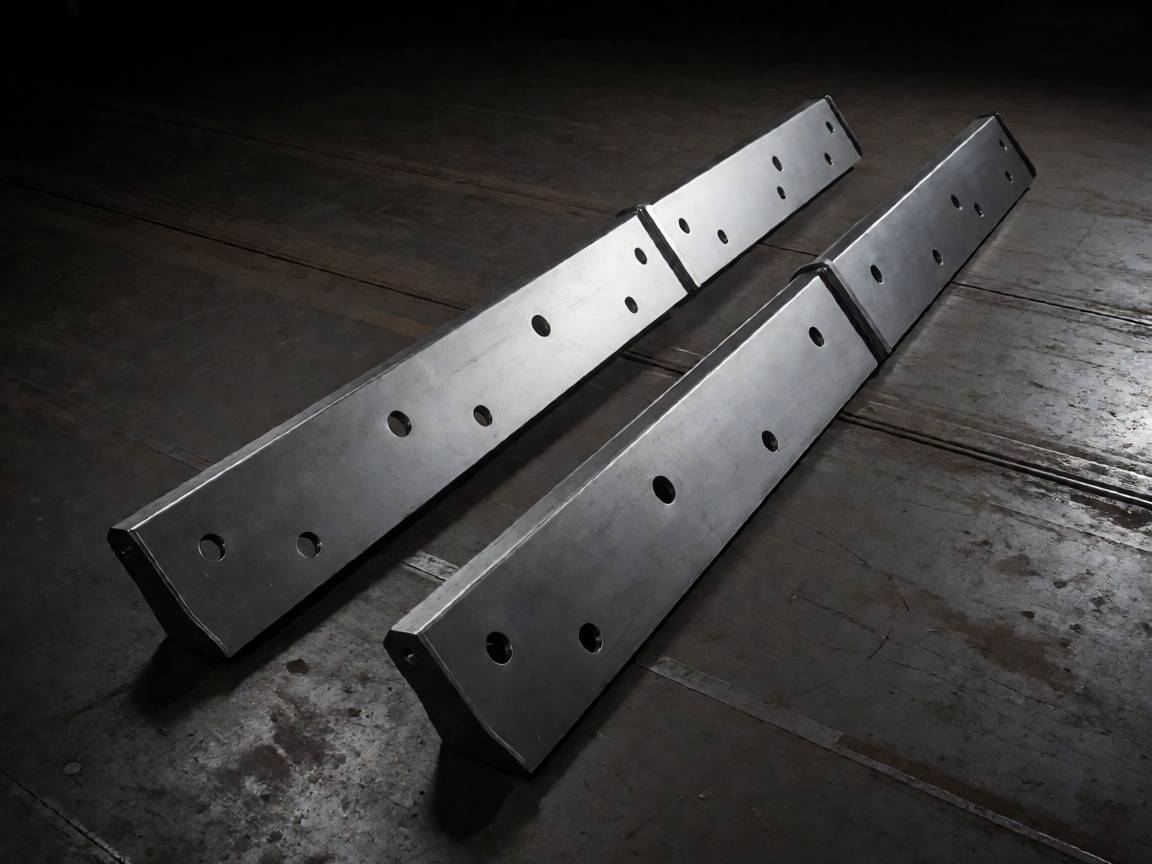
A cutting edge is the replaceable steel strip bolted along the bottom of the plow moldboard. It is the only part of the plow that touches the pavement, so it takes the full load of down-pressure, abrasive grit, salt and shock. As the edge wears back, the plow loses its scrape angle, starts to ride up on packed snow and leaves a layer behind. Operators compensate with more down-pressure, which wears the edge faster still.
The wear is not just abrasion. The edge hits curbs, manhole covers, broken pavement and frost heaves at speed. A brittle edge cracks under those shock loads; once a section of carbide or hardened steel is gone, the remaining edge wears quickly and the plow itself starts taking the punishment. That is why edge selection is a balance between abrasion resistance and toughness, not a simple hardness contest.
The blade types fleets actually buy
Five edge types cover most municipal and contractor work. The durability figures below come from state DOT field studies that measured plowed miles per set across the same winter conditions.
Carbon steel
The baseline. Cheap, tough and easy to source, with roughly 1,200 plowed miles per set in the DOT snow trials. It is the right edge for light-duty routes, back roads and contractors who would rather change a cheap edge than risk a brittle one on rough pavement.
Flame-hardened steel
A carbon edge with the wear face flame-hardened to a shallow depth. The DOT trial measured about 750 miles — better abrasion resistance on the face, but the hardened layer is thin and the edge loses its advantage once it wears through.
Through-hardened and austempered steel
Hardened through the full section rather than just the face. The trial figures were about 990 miles for through-hardened and 750 for austempered. The advantage over carbon is real but modest; the advantage over flame-hardened is consistency as the edge wears.
Carbide-insert edges
Tungsten carbide inserts brazed into a groove cut along the bottom edge. The DOT trial measured about 2,100 plowed miles — roughly twice a carbon edge and two and a half to three times the hardened steels. This is the edge for high-mileage primary routes where a blade change costs more in lost road time than the blade costs in cash.
Isolated and articulated carbide
Newer designs that set individual carbide plugs or segments in the steel so a shock load cannot crack the whole edge, and articulated systems that let the edge follow the road crown. Field results vary by system and by road; the principle is sound, but they cost more than conventional carbide and the fit has to suit your plow.
One finding matters more than the rest: carbide inserts should not be used for blading gravel. Gravel is about three times more severe on an edge than snow, and the steel matrix around the carbide wears away until the edge folds back and fails. Carbide is a snow-and-ice edge, not a gravel edge.
The honest math on carbide
Carbide-insert edges cost roughly three times what carbon or hardened steel costs per foot. On a single truck that is a real budget line. The case for them is not the sticker price; it is the cost per plowed mile. Several state DOT studies found carbide-insert edges delivered the lowest cost per mile of the types tested, because they lasted long enough to avoid the repeated shop trips.
That math only holds if your routes are high-mileage and your change cost is real. On a short residential route, a carbon edge that costs a third as much and lasts half as long can still win. On a highway route where a change means an hour and a half of lost plowing and two people off the road, carbide usually pays. The fleets that get this right run a mix: carbide on the primary routes, steel on the back roads and gravel shoulders.
Straight, curved and quarry-style edges
The profile has to match the machine. Straight cutting edges are the standard for municipal plow trucks and are the easiest to match to an existing bolt pattern. Curved plow blades follow the moldboard and are common on highway plows. Quarry-style heavy edges are built for graders and loaders working gravel, yards and unpaved roads, where the shock loads would destroy a snow edge.
Bolt pattern is where most orders go wrong. Edges are pre-drilled to a pattern, and a pattern that is close but not exact will not seat flat. Send a drawing, a template or photos with measurements and the pattern can be reproduced exactly. Standard lengths or cut-to-size both work; the important thing is that the holes line up and the edge sits flat against the moldboard, because a proud edge vibrates and wears unevenly.
When to replace a cutting edge
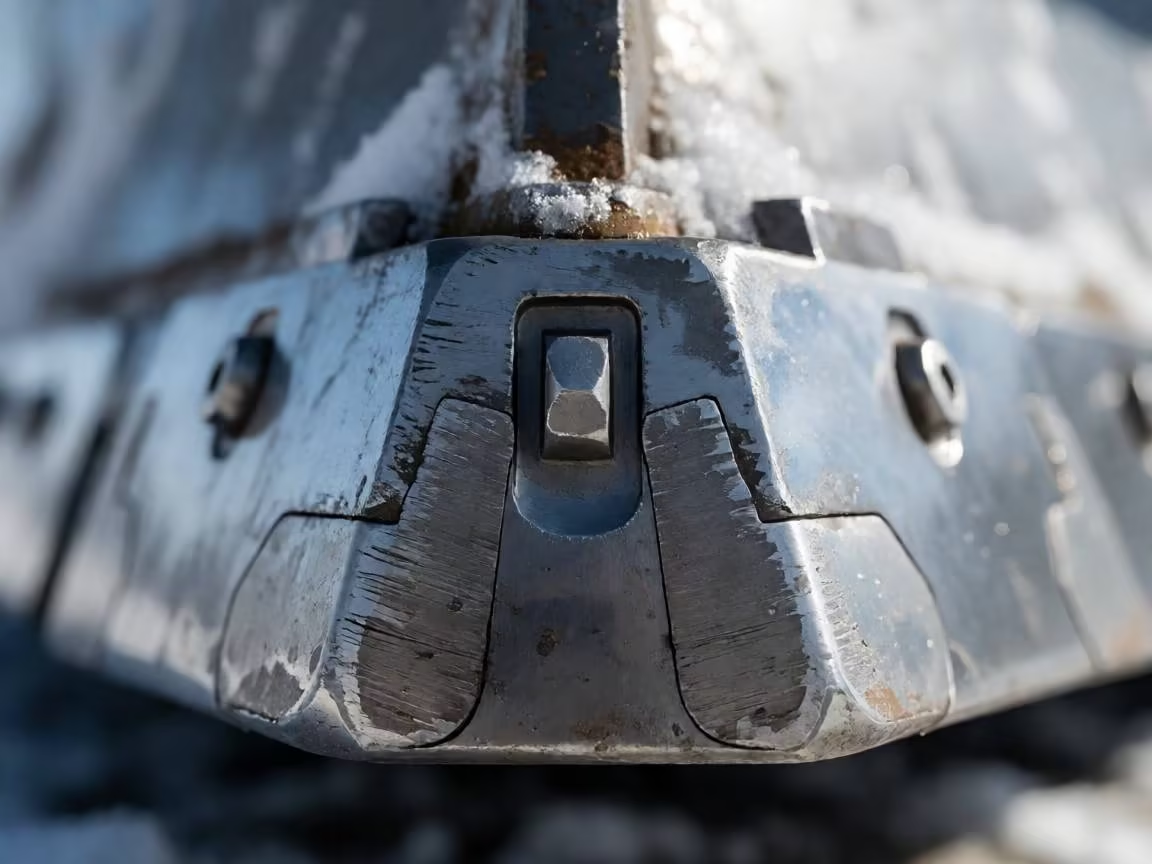
Replace the edge when the carbide inserts are gone or the hardened face has worn through, not when the edge finally fails on the road. The signs are consistent: the plow rides up and leaves packed snow, the edge starts to chatter or vibrate, the scrape line becomes uneven, and the operator is adding down-pressure to compensate. Once carbide is lost, the remaining steel will not last another storm, and running it wears the moldboard and the plow frame.
Pre-season is the time to plan, not the first storm. Standard profiles are produced year-round, but for seasonal contracts the volumes should be confirmed before September so the edges land before the first snow. A pre-season container program costs less than expediting a partial order in January, and it keeps the depot shelves full when the roads are already bad.
What we build for snow-clearing fleets
Our snow plow blades and cutting edges are produced from high-strength wear-resistant steel and machined to exact mounting standards. The line covers standard straight cutting edges, curved plow blades and heavy-duty quarry-style edges for graders and loaders, with high-carbon boron steel through hardened alloy options selected against your road conditions and abrasion level. Bodies are forged and heat-treated, then drilled and checked for flatness so the edge seats without vibration.
Edges come pre-drilled to your pattern, in standard lengths or cut to size, and we supply OEM and private-label programs for plow manufacturers as well as direct container programs for municipal depots. Typical patterns include the BR-SB1220 straight cutting edge, the BR-SB9100 plow blade and the BR-SB3350 heavy-duty edge. Monthly container shipments go to fleets and dealers worldwide, and a mixed trial order lets you run a carbide and a steel edge side by side on your own routes before committing the season. If you also run tillage equipment, our agricultural wear parts follow the same ground-engaging wear-part logic.
Frequently asked questions
Can you match our existing blade dimensions and hole pattern?
Yes. Send a drawing, a template, or photos with measurements and we reproduce the existing pattern exactly. Pre-drilled holes and the edge profile are matched to your plow, so the edge seats flat without modification.
Carbide or steel — which edge should our fleet buy?
Carbide on high-mileage primary routes where a blade change costs real road time; carbon or hardened steel on back roads, light routes and any gravel work. Carbide inserts should not be used for blading gravel at all. Many fleets run a mix rather than one edge everywhere.
How long should a cutting edge last?
It depends on the surface, down-pressure and hours. State DOT field studies measured roughly 2,100 plowed miles for carbide-insert edges against about 1,200 for carbon and 750 to 990 for hardened steels. Gravel work wears an edge far faster than snow.
What lead time should we plan before winter?
Standard profiles are produced year-round, but for seasonal contracts we recommend confirming volumes before September so edges arrive before the first snow. Pre-season container programs are cheaper and more reliable than expediting a partial order mid-winter.
Send us your plow model, your edge dimensions and your bolt pattern, and we will match the edge before anything ships. Tell us your road mix — highway, residential, gravel — and we will recommend carbide or steel per route. You can contact us or request a pre-season quotation for your fleet.
Related posts

Snow Plow Cutting Edges: Steel, Carbide and What Fleets Should Buy
A county road department in the northern US ran out of cutting-edge life in the middle of a February storm. The soft edges on two plow trucks had worn back to the steel in four hours of hard plowing, ...

Cultivator Teeth and Points: How to Choose the Right Wear Part
A mixed farm in the US Midwest ran a six-metre stubble cultivator through a wet harvest season. By the third week the points had worn back enough that the tines were dragging soil instead of cutting i...

Morbark Grinder Teeth: Styles, Model Fit and How to Choose
A tree-waste processor in Oregon ran a Morbark 4600XL horizontal grinder through demolition wood that was mixed with rebar and concrete dust. The original teeth were gone in six weeks, and by the time...

Wood Grinder Wear Parts: A Guide for Peterson Pacific and Terex CBI Machines
A biomass yard in the Pacific Northwest was processing stumps, demolition wood and green waste through a pair of horizontal grinders, and their wear-parts spend was all over the map: cheap tips that d...
Seppi Mulcher Teeth: A Replacement Guide from MINIFORST to MAXISOIL
A forestry contractor maintaining forest roads in the Dolomites burned through a season's budget of teeth in eight weeks. His MIDIFORST dt was doing the work of two machines — mulching brush one week,...