
Last month a tree service crew from Georgia sent us photos of their grinder. The machine had less than 800 hours on it, but the wheel was shaking so hard the operator refused to run it. They suspected bearings. It turned out to be eight stump grinder teeth worn down to stubs.
We see this every week. The teeth are the cheapest wear part on the machine, and they decide how the whole thing performs. This guide covers what we tell customers who call us: how to know when teeth are done, how to match new ones to a Vermeer or Morbark machine, and how to get honest service life out of them.
Four signs your stump grinder teeth are done
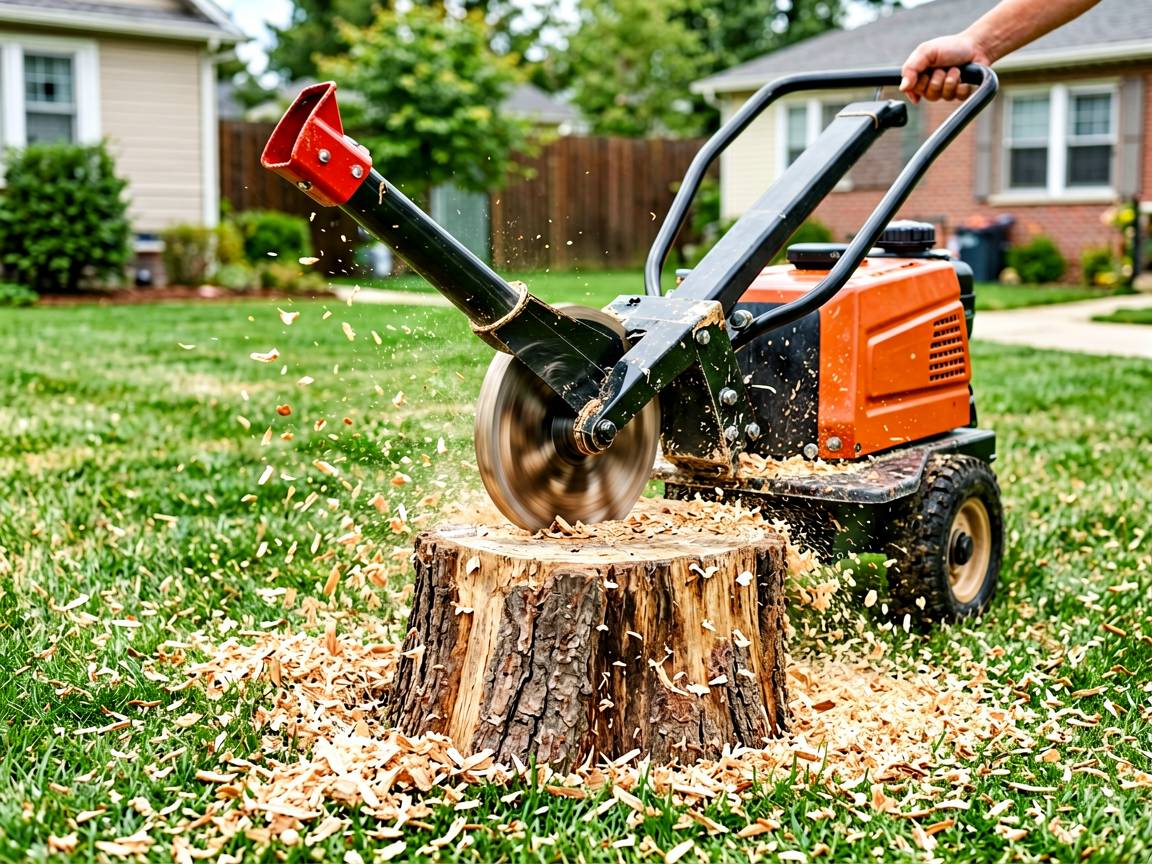
Carbide does not fail loudly. It fades. A crew that runs the same wheel every day stops noticing the slow decline, so it helps to check deliberately at the start of each job:
- Ragged stumps. A sharp tooth shaves wood the way a plane shaves a board. A dull one tears it. If the finished stump looks chewed instead of cut, the teeth are past their best.
- Vibration in the controls. Some shake is normal on a stump grinder. When it doubles, the cutting edges are no longer taking even bites.
- The machine bogs down. If RPMs drop on stumps that used to be easy, the engine is working harder to do the same job. Dull teeth convert horsepower into heat instead of chips.
- Dust instead of chips. Healthy teeth throw defined chips. Worn teeth grind the stump into powder, which is slower and wears the pockets faster.
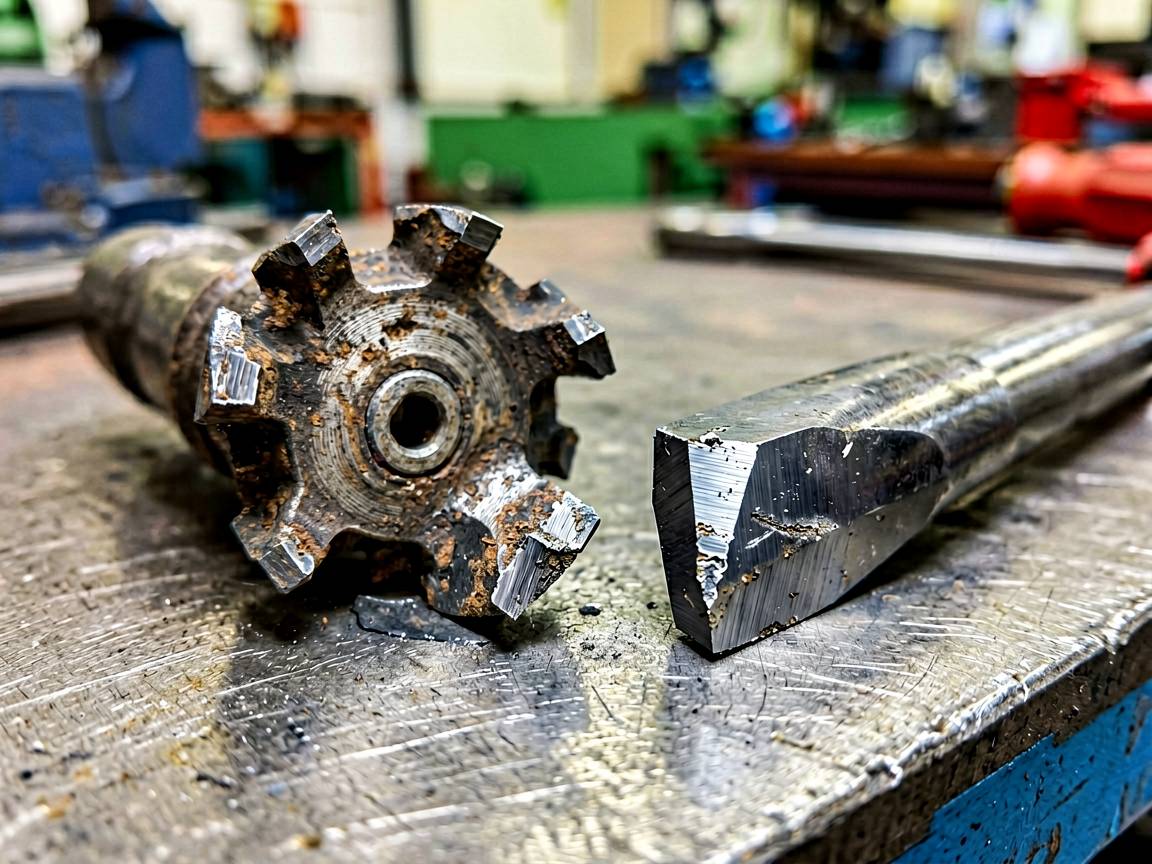
One more check that costs nothing: look at the carbide itself. When the tip has worn flush with the steel body, or the body is rounding over, replace the tooth. Running it longer starts eating the pocket, and pockets cost a lot more than teeth.
The steel body matters more than most buyers think
Almost every buyer asks about the carbide grade first. Fair question, but in our factory the body is what fails first more often than people expect. A tooth that hits a buried brick or a piece of fence wire survives on the strength of the steel around the carbide, not the carbide itself.
That is why we hot forge our bodies instead of casting them. Forging aligns the grain of the steel with the shape of the tooth, so it bends where a casting cracks. After forging, every body goes through vacuum heat treatment and CNC machining, which keeps the seating surface true so the tooth sits flat in the pocket. A tooth that sits flat wears evenly. A tooth that rocks in its pocket destroys both itself and the holder.
Matching teeth to your Vermeer or Morbark machine
Vermeer stump grinder teeth and Morbark grinder teeth do not share dimensions. Neither do Rayco, Carlton or Bandit. The shank diameter, the pocket depth, the bolt thread and the carbide position all differ between makers, and sometimes between models from the same maker.
Before ordering anything, pull one tooth and measure the shank. On common Vermeer SC-series stump grinders you will typically see 7/16 inch shanks, while many Morbark and Bandit wheels use different pockets entirely. Write down three numbers: shank diameter, overall length, and bolt size. With those, a supplier can match the tooth without guesswork.
Our grinder tip range covers the common fitments for Vermeer, Morbark, Rayco, Toro and Bandit machines, in both standard carbide and heavy-duty grades. For example, the BR-GT2990 suits high-flow cutting wheels that see mixed conditions, while the BR-QG1806 and BR-JM3700 cover other common pocket styles. If you are unsure, send a photo of your worn tooth with a ruler next to it. We confirm fitment before quoting, not after.
One carbide tip or two?
Single-carbide teeth cut faster and cost less. Dual-carbide teeth, with a second carbide insert on the side or rear, hold up better in rocky or sandy soil where abrasion comes from every direction. If you mostly grind stumps in lawns and parks, single carbide is usually the right call. If your work is land clearing after construction, where the stump is surrounded by grit and crushed stone, the dual-carbide versions pay for themselves in fewer changeouts.
Replacing teeth without wrecking the wheel
Three habits that save real money, learned from watching customers destroy expensive wheels:
- Replace teeth in sets. Mixing four worn teeth with four new ones makes the new teeth do all the work, and they die young. Change the whole row, or at least the full spiral.
- Clean the pockets. Packed sawdust and rust keep the new tooth from seating fully. Five minutes with a wire brush doubles the contact area.
- Torque evenly and rotate. Snug bolts by hand, then tighten in a pattern. If your wheel has different positions for aggressive and finish teeth, move each tooth to the next position at each change so wear evens out across the set.
What aftermarket teeth actually save
Honest answer: it depends on the supplier. Good aftermarket teeth from a manufacturer with its own forging lines typically run well below dealer list prices, and the quality gap has mostly closed. Bad aftermarket teeth are cast bodies with soft carbide, and they cost more than OEM once you count the extra changeouts and the pocket damage.
The difference is process control. Ask any supplier two questions: do you forge or cast the body, and do you braze carbide in-house? A real factory answers both immediately. We do both in-house, which is why we can quote stump grinder teeth for Vermeer, Morbark and other machines at prices a dealer cannot match, with the same tooth traceable to its material batch. We also supply dealers and rental fleets under private label.
Questions we get asked
How long should stump grinder teeth last?
Clean residential stumps with soft ground: often 25 to 40 hours per set. Rocky or sandy soil: 8 to 15 hours is normal. The range is wide because soil does most of the wear. Track hours per set for your own routes and you will find the replacement interval that suits your conditions.
Can I mix teeth from different makers on one wheel?
We advise against it. Teeth from different makers rarely share weight and cutting geometry, so the wheel goes out of balance and the heavier teeth take extra load. If you are switching suppliers, replace the full set at once.
How do I know which tooth fits my machine?
Three things solve it: the machine model, the original part number, or a clear photo of the worn tooth with its shank diameter measured. Send any of these through our contact form and we confirm the match before you pay anything.
Can I order a small trial batch first?
Yes. We encourage it. A trial set lets you test wear life on your own soil before committing to fleet volumes, and most of our long-term dealer relationships started with exactly that.
Dull teeth cost you hours every single day. If your stumps look chewed and your wheel vibrates, the fix is cheaper than you think. Send us your machine model or a photo of a worn tooth through the contact page, and we will come back with the matching tooth, pricing and lead time within 24 hours. If you run a forestry mulcher as well, our guide to carbide mulcher teeth covers the same ground for drum mulchers.
Related posts

Bandit Beast Wear Parts: A Practical Guide to Teeth, Cutterbodies and Rakers
A grinding contractor in Ohio added a second shift on his 3680XP to keep up with tear-off shingles, and his wear-parts bill doubled in a month. The teeth were not wearing out faster — he was simply ru...

Denis Cimaf Mulcher Teeth: A Replacement Guide for DAH and DAF Series
A land-clearing crew near Trois-Rivières was three days into a right-of-way job when the DAF-180E started leaving streaks of uncut brush. The operator pulled the head, and half the forged knives were ...

Chocky Bars: What They Are, Where to Use Them, and How to Choose
A quarry manager in Western Australia once told us his bucket rebuild budget was the only line item he could not predict. The lip would look fine at the monthly inspection, then lose six millimeters o...

FAE Mulcher Teeth: A Replacement Guide for UML, UMM and UMH Mulchers
FAE mulching heads hold their value better than almost anything else in the land clearing business, and for good reason. The weak point is not the machine. It is a row of steel teeth spinning against ...

Stump Grinder Teeth: When to Replace Them and How to Choose
Last month a tree service crew from Georgia sent us photos of their grinder. The machine had less than 800 hours on it, but the wheel was shaking so hard the operator refused to run it. They suspected...