
A land-clearing crew running a Shearex head on a compact track loader spent a week in rocky ground and replaced the four outer teeth on the rotor three times. The teeth were not the wrong brand. They were the wrong construction for that position: hardfaced steel teeth doing rock work, where the carbide version belongs.
Shearex mulcher teeth come in two very different builds, and the difference is not cosmetic — one is a wear-resistant steel body with hardfacing, the other carries four tungsten carbide tips. Putting either one in the wrong position is how a set of teeth dies in a week instead of a season. This guide covers what BauRong makes for Shearex rotors, how to tell which tooth you need, and the fitment checks that prevent comebacks. For the wider picture on tooth classes, see our forestry mulcher teeth guide.
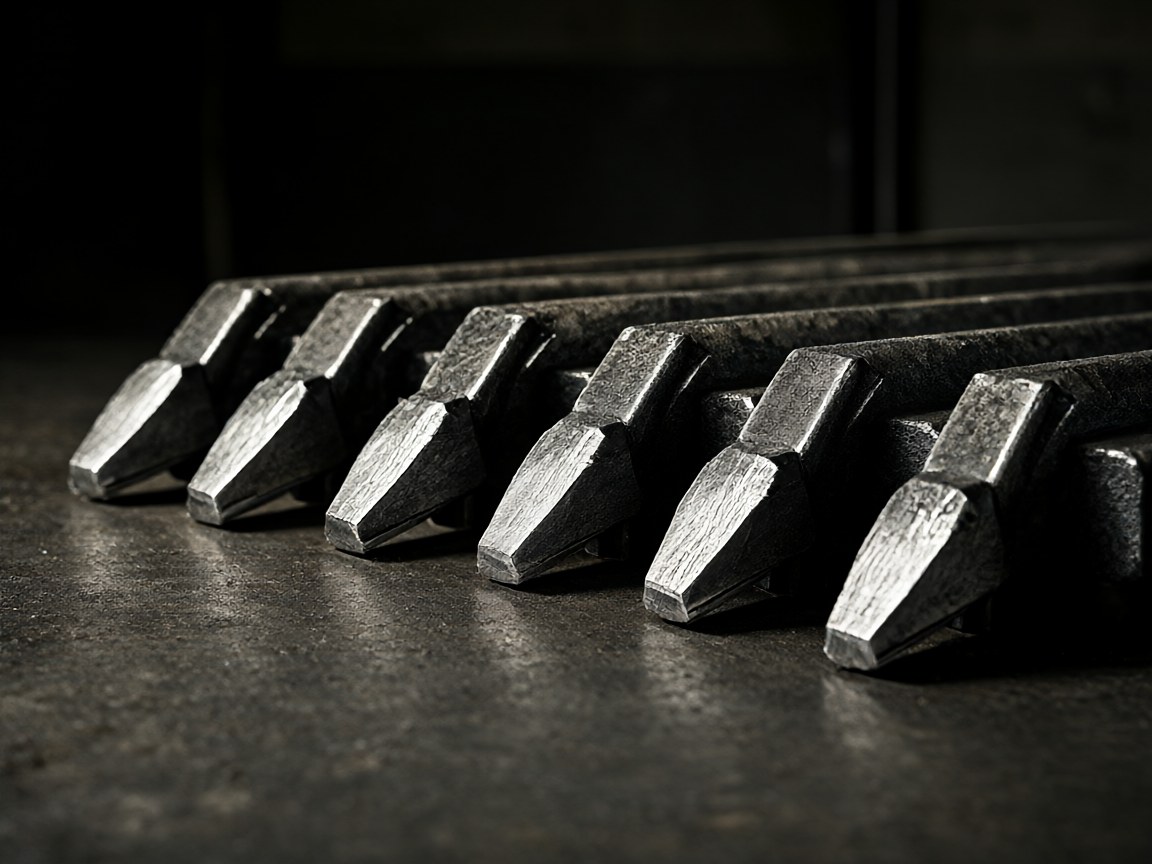
Where a Shearex rotor loads its teeth
Shearex builds mulching heads for skid steers, compact track loaders and excavators — the VM-40SL and HD series machines show up most in North American land clearing, and the HM-series rotors are the ones most aftermarket teeth are ordered for. On any of them the load is not even:
- Outer positions take the ground contact and the rock. They wear two to three times faster than the centre.
- Centre positions do the chipping and see mostly green material — a hardfaced steel tooth lasts well here.
- Edge and side scrapers protect the rotor shell; when they are gone the shell starts to wear and the repair stops being about teeth.
The two BauRong teeth for Shearex heads
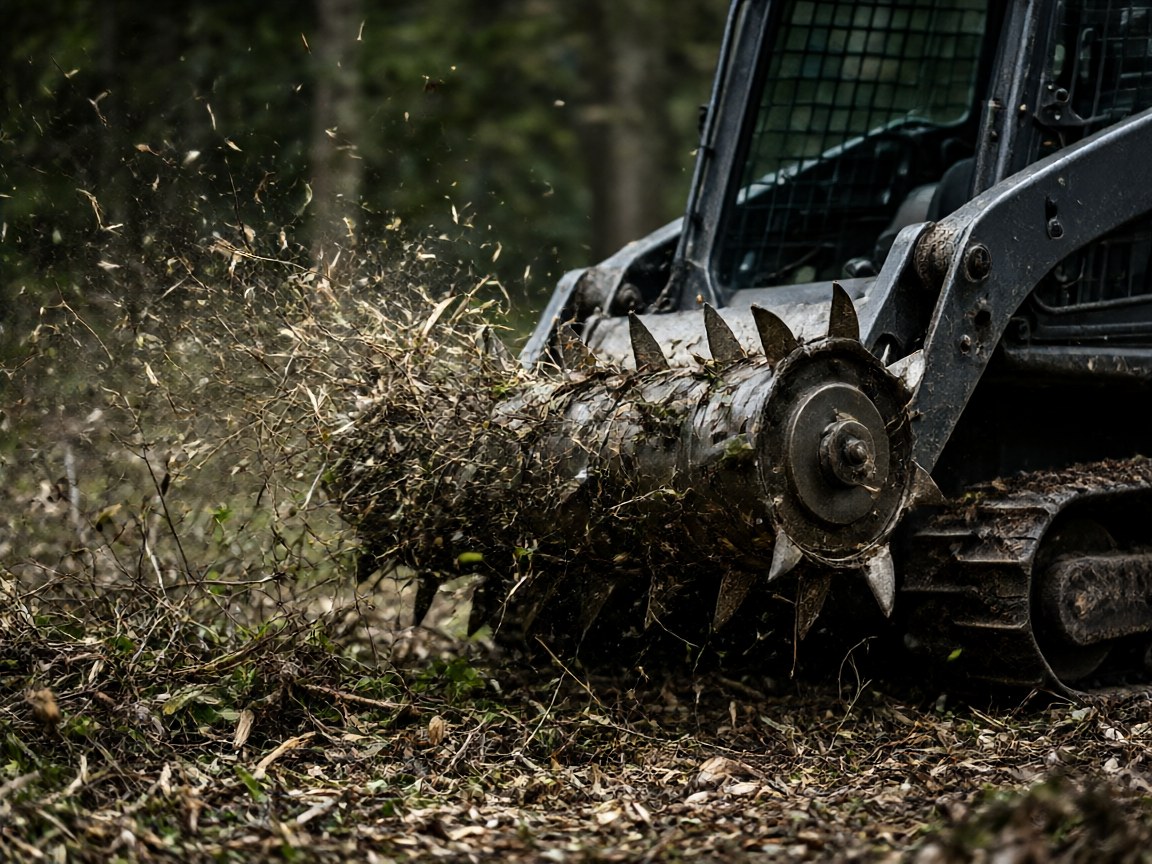
BR-FM2027 — hardfaced steel, impact resistant
A replacement tooth fitting Shearex forestry mulchers, made from wear-resistant steel with additional PLA hardfacing on the cutting edge. It is the impact-resistant version, built for contaminated material and abrasive applications where a brittle edge would chip out. 87.9 × 77.5 × 78.3 mm, 1.3 kg. See BR-FM2027 Shearex replacement tooth.
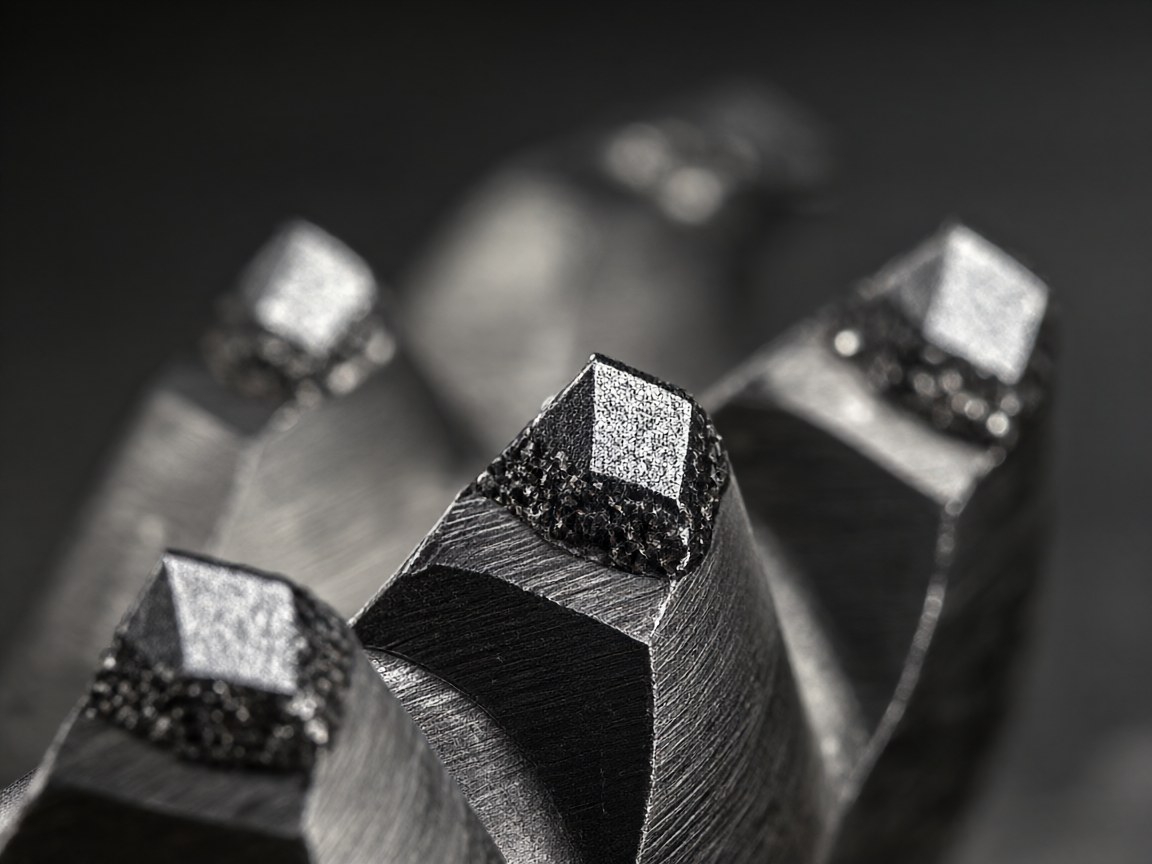
BR-FM2015 — four tungsten carbide tips, severe duty
A carbide-tipped replacement tooth fitting Shearex forestry mulchers with four tungsten carbide tips, impact resistant and severe duty rated, recommended for rocky ground and designed for the outer position on the rotor. It fits the Shearex HM-series. 92.1 × 77.8 × 62.7 mm, 1.26 kg. See BR-FM2015 Shearex carbide tooth.
Hardfaced steel or four-tip carbide?
The decision is about the ground, not the price:
- Rock, stone, gravel, demolition debris → four-tip carbide (BR-FM2015). The carbide takes the abrasion that eats steel, and the four-tip layout keeps a cutting edge as one tip wears.
- Green material, brush, soft hardwood, clean soil → hardfaced steel (BR-FM2027). It cuts faster, costs less, and hardfacing handles the abrasion that does occur.
- Mixed ground, one tooth for everything → start with the hardfaced tooth on the centre and inner positions and put carbide on the two outer positions. That mix usually outperforms a full set of either.
Fitment: measure before you order
Shearex has run several rotor generations, and the tooth that fits one HM rotor is not automatically the tooth for another. Three checks settle it:
- Measure the body — overall length, width at the cutting face, and height. Compare against the two dimensions above; if neither matches within a millimetre or two, you need a different part, not a closest guess.
- Photograph the mounting face with the tooth off the rotor, plus the worn tooth beside a ruler.
- Confirm the bolt: diameter, thread pitch and length. Reusing a stretched bolt on a new tooth is the most common reason a fresh tooth comes loose in the first shift.
Torque procedure and the run-in retorque schedule are the same for any mulcher rotor and are covered step by step in the mulcher teeth installation and torque guide.
Wear management on a Shearex rotor
Rotate positions at every service interval. On these rotors the outer teeth wear the carbide flat within 60–100 hours on rocky ground while the centre teeth are still sharp — moving the centre teeth outward once doubles the life of the set and costs nothing but an hour of labour.
Replace a tooth when the carbide is flat into the steel, chipped on a corner, the body is mushroomed, or the bolt hole has gone oval. A tooth that no longer sits flush on a clean seat is damaging the holder every hour it stays on the machine.
BauRong has forged and machined wear parts for forestry, agriculture and mining since 2009. Both Shearex-compatible teeth are hot-forged from alloy steel, vacuum heat treated and machined to the original seating, so no rotor modification is needed. Browse the Shearex-compatible mulcher teeth, or send the head model, the original part number or a photo of the tooth with a ruler and we will match it — contact us for a quotation within 24 hours. Shearex is a trademark of its owner, used here for compatibility identification only.
Related guides
- forestry mulcher teeth guide
- mulcher teeth installation and torque guide
- forestry mulcher wear parts range
- Loftness mulcher teeth guide
- skid steer mulcher teeth guide
Frequently asked questions
What is the difference between the two Shearex teeth BauRong makes?
BR-FM2027 is a hardfaced steel body for impact resistance and abrasive but not rocky ground; BR-FM2015 carries four tungsten carbide tips and is the severe duty option for rocky ground, designed for the outer rotor position on Shearex HM-series heads.
Which Shearex models do these teeth fit?
BR-FM2015 is specified for the Shearex HM-series rotors. BR-FM2027 is specified for Shearex forestry mulchers generally. Because Shearex has run several rotor generations, confirm by measuring the body and bolt pattern, or send us the head model and a photo.
Can I mix carbide and steel teeth on the same rotor?
Yes, and on mixed ground it is usually the best setup: carbide teeth on the outer two positions where rock contact happens, hardfaced steel teeth in the centre where the load is mostly green material. Keep the pairing symmetrical so the rotor stays balanced.
How long should Shearex mulcher teeth last?
On clean green material a carbide tooth can run several hundred hours. On rocky or sandy ground the same tooth may be finished in 60 to 100 hours at the outer positions. Track hours per position rather than per set and rotate to spread the wear.
Related posts

AHWI and Prinoth Mulcher Knives: Types, Fit and Wear
AHWI and Prinoth mulcher knives explained: knife versus carbide hammer, the UPT and M-Class rotor families, how to identify the blade on your rotor, and how wear actually progresses on a knife edge.

Vermeer Stump Grinder Teeth: Wheel and Vertical Grinder Fit
Vermeer stump grinder teeth by machine layout: wheel versus vertical grinders, the tooth styles each one takes, how to read wear, and how to match a replacement by dimension instead of by part number alone.

Bobcat Mulcher Teeth: Drum and Disc Fit, Wear and Replacement
Bobcat mulcher teeth differ between drum and disc heads. What the OEM part numbers map to, how the BR-FM2034 replacement fits, the two 1/2 inch UNF threads that decide it, and when a tooth is finished.

Haybuster and Duratech Grinder Teeth: A Fit and Wear Guide
Tub grinder teeth for Haybuster and Duratech machines: how tub and horizontal grinders load their hammers differently, the severe duty replacement that fits both, wear signs, and how to match a tooth by dimension.

Denis Cimaf DCC-301 and DCH-303: Tooth, Holder and Fitment Reference
How to read the Denis Cimaf part numbering for mulcher teeth and holders, what DCC-301 and DCH-303 actually are, how to check wear on the tooth and the holder, and how to order the right replacement by dimension.