
A tree service on the American East Coast ran a 15-inch drum chipper through a week of storm cleanup. By the fourth day the chips had gone from clean squares to long stringy tears, the truck was loading less per box, and the engine was working harder on the same wood. The knives had not broken. They had simply gone dull, and nobody had looked at them because the machine was still running.
That is the normal failure mode of wood chipper knives: they wear gradually, the chip quality drops before the machine stops, and the cost shows up in fuel, throughput and chipper box weight rather than in a repair bill. This guide covers the knife types, the steel grades, the bevel angles that suit different wood, and how to sharpen and replace knives without losing a day.
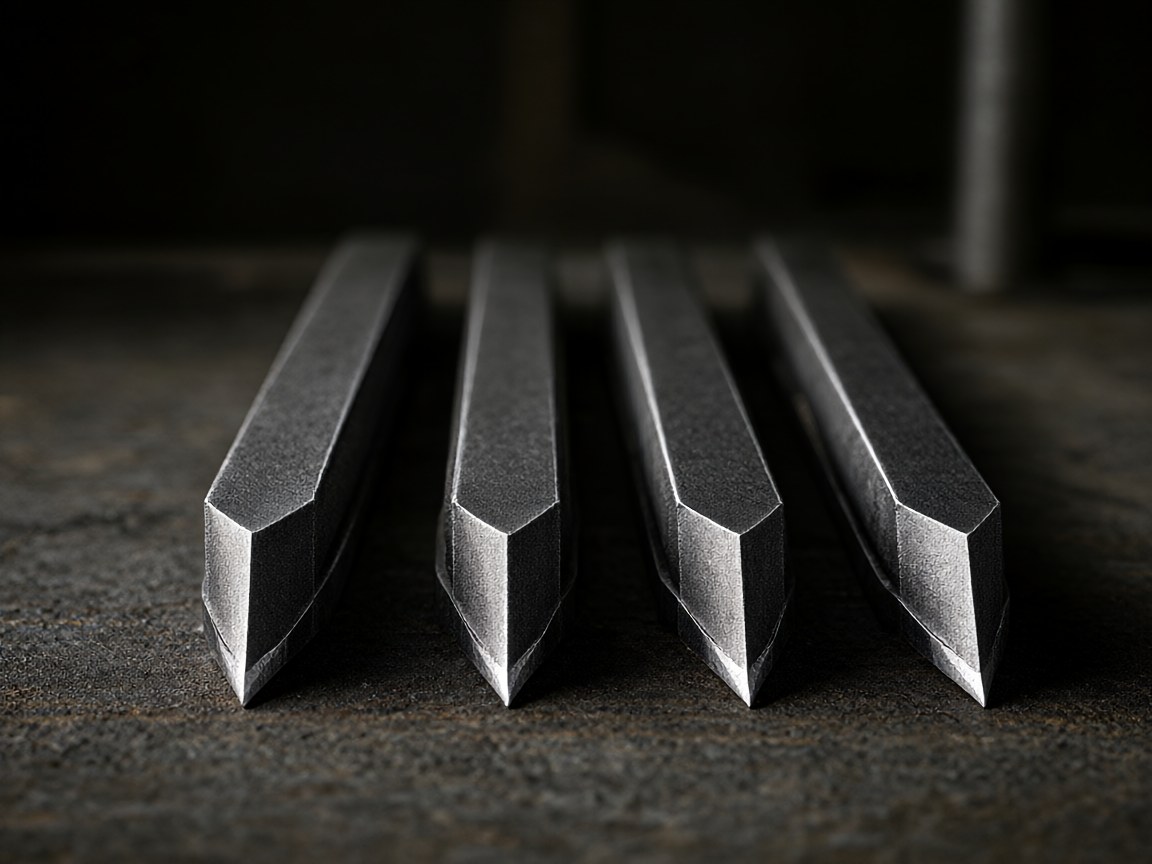
Drum and disc chippers take different knives
A drum chipper mounts knives in slots along a rotating drum, usually in pairs or groups, and cuts the wood against a bed knife. A disc chipper mounts knives on the face of a rotating disc. Both do the same job — shear the wood into chips — but the knife geometry, the mounting and the number of knives per set differ, and a knife made for one will not fit the other.
The knife is a rectangle of tool steel with a bevel ground along one edge and slotted bolt holes. On a drum chipper the knives are usually longer and thinner relative to the drum; on a disc chipper they are shorter and mounted radially. The bed knife, which the rotating knife cuts against, is a separate wear part and has to be set to the right clearance — a sharp knife against a worn bed knife still makes bad chips.
Steel grades and what they buy you
Chipper knife steel is chosen on the trade-off between wear resistance and toughness. Harder steel holds an edge longer and chips more easily under impact.
High-carbon chipper steel
The standard grade, typically 55 to 58 HRC. It holds a good edge in clean green timber at the lowest cost per regrind cycle. The right choice for tree services chipping clean branches and softwood.
D2 and Cr12MoV tool steel
Chromium tool steels hardened to roughly 58 to 62 HRC. The chromium-carbide matrix gives two to three times the edge life of standard steel on abrasive dry wood, while keeping enough toughness for moderate metal impact. The step up for pallets, dry hardwood and urban green waste.
DC53 tool steel
A higher-toughness tool steel for mixed and hard wood. It resists micro-cracking better than D2 and costs more; the trade is fewer knife changes on jobs where the wood is unpredictable.
HSS inlay
A high-speed steel cutting edge inlaid into a tougher body. It handles shock and knots and stays hard when the edge gets hot, which suits heavy-duty chippers and wood with occasional metal.
TCT carbide-tipped
Tungsten carbide brazed onto the cutting edge. Five to ten times the service life of D2 in contaminated streams such as railroad ties and demolition wood. Carbide is brittle, so it is the wrong choice where the feed is full of stone and steel that will crack it.
The honest rule: match the steel to the dirt in the wood. Clean softwood does not need carbide. Contaminated demolition wood punishes standard steel and rewards D2 or carbide. Paying for carbide and then feeding it nails is the most expensive way to run a chipper.
Bevel angles by wood type
The included bevel angle sets the balance between a sharp, low-force cut and a strong edge that survives impact. Most chipper knives run somewhere between 25 and 42 degrees, and the right angle depends on the wood rather than on the machine.
Softwood and green timber (pine, spruce, poplar)
25 to 30 degrees. The sharper angle slices through wet, fibrous wood with minimum cutting force and gives clean chip faces with little fibre tear.
Dry hardwood (oak, hickory, eucalyptus)
30 to 37 degrees. The denser wood loads the edge harder, so the bevel is widened to keep the edge from rolling over.
Contaminated biomass and whole-tree chipping
35 to 42 degrees. The wider bevel spreads impact forces across the cutting face and resists edge rollover when soil and stone are in the feed.
A general-purpose knife is usually ground near 30 degrees. If you change the angle, change it deliberately and keep it consistent across the set — a mismatched knife in a drum throws the balance and produces uneven chips.
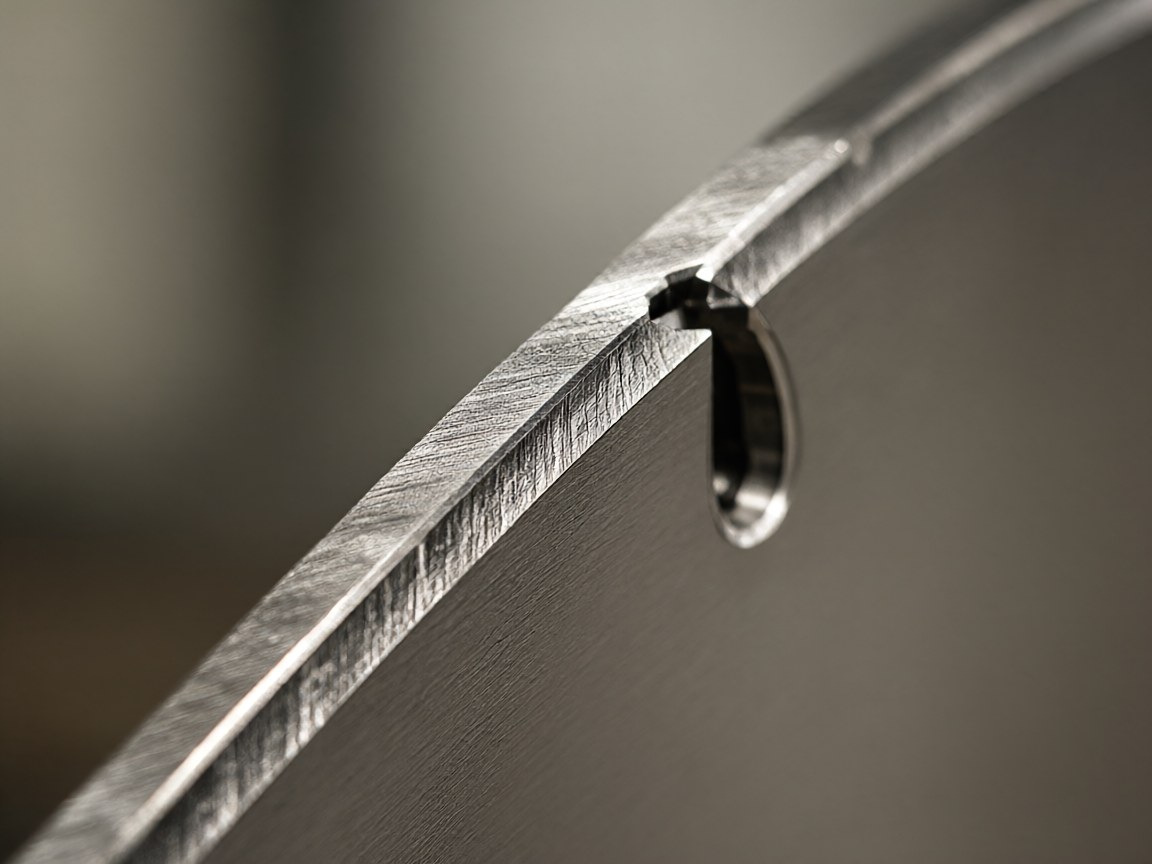
Tolerance and balance matter as much as the steel
Chipper knives are ground to a thickness tolerance of about plus or minus 0.05 mm and a bevel tolerance of about half a degree. That sounds fussy until you consider that the knives sit in a drum spinning at speed: a knife that is a few hundredths thick differently from its neighbours changes the cutting circle, loads the bearings unevenly and produces chips of inconsistent length.
Chip geometry is specified in standards like EN 17225 for biomass fuel, and buyers check it. A knife set that is ground and balanced as a set produces uniform chips; a set assembled from different batches does not. That is why a good supplier grinds a set together rather than shipping whatever is on the shelf.
Sharpening and replacement
Sharpen on a jig at the maker’s angle, usually around 30 degrees, and take the same amount off each knife in the set. High-speed steel edges may need sharpening every six to eight hours of chipping in dirty wood; D2 and carbide hold much longer. Carbide needs a diamond wheel — a standard grinding wheel will not cut it and will damage the insert.
Replace a knife when the bevel has been ground back to the point where the bolt slots or the body are at risk, or when the edge chips deeply enough that removing the chip takes the knife below its minimum width. Also replace the bed knife when it is worn or nicked; a new set of knives against a worn bed knife is money wasted.
Fit: the numbers that decide it
Knives are specified by length, width and thickness, and by the bolt pattern. Typical sizes run from about 230 x 80 x 16 mm for a 12- to 15-inch drum chipper up to about 350 x 100 x 20 mm for biomass chippers, and the pattern differs by maker and model.
That is why the model matters more than the brand. A Bandit 12-inch and a Bandit 18-inch drum take different knife lengths. A Jenz or Doppstadt biomass chipper takes a heavier knife again. Our categories for the main platforms are Jenz chipper knives, Bandit chipper wear parts and Vermeer wear parts, and the full range is under forestry mulcher and chipper wear parts. If your machine is not listed, send the knife dimensions, the bolt pattern and a photo and we will match it.
When the knives are costing you money
Watch the chip, not the clock. Clean, square chips with consistent length mean the knives are cutting. Long stringy chips, dust, and a hard-working engine on the same wood mean the edge has gone. On a drum chipper, a dull set also loads the bearings and the clutch, and the extra load shows up as heat and fuel long before anything breaks.
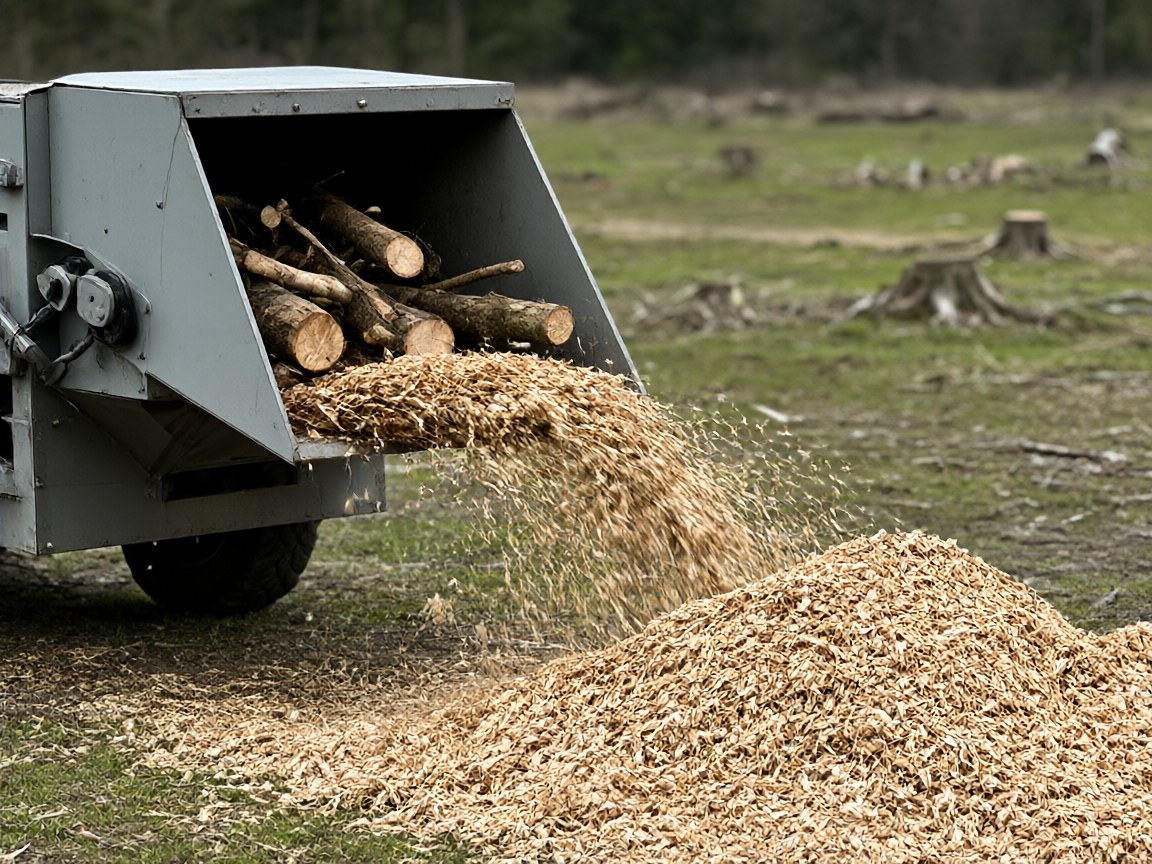
What we build for chippers and shredders
Our chipper knives are ground from high-carbon and tool steels and supplied in matched sets with the bevel and thickness tolerances held across the set. The BR-KF1023 chipper knife covers the Jenz and biomass platforms, the BR-CT6001 Bandit cutter body covers the Bandit Beast cutter body, and the BR-VE6055 Vermeer tooth covers the Vermeer range. Carbide-tipped and coated options are available for contaminated feed.
For the tooth and cutter-body side of the same machines, our Bandit Beast wear parts guide covers the Bandit Beast in detail. Monthly container shipments go to tree services, biomass plants and dealers worldwide, and mixed orders let you try a standard and a tool-steel knife on your own wood before committing.
Frequently asked questions
Related guides
- Peterson Pacific and Terex CBI grinder wear parts
- Morbark grinder teeth guide
- wood recycling wear parts
Are these knives made by Jenz, Bandit or Vermeer?
No. Baurong is an independent aftermarket manufacturer. Every brand name on this page describes compatibility only and remains the property of its owner. Knives are ground to the dimensions and bolt patterns those machines use and checked against sample knives before production.
What angle should my chipper knives be ground to?
Usually around 30 degrees for general work. Softwood and green timber cut best at 25 to 30 degrees, dry hardwood at 30 to 37, and contaminated biomass at 35 to 42. Keep every knife in the set at the same angle so the drum stays balanced.
D2 or carbide for my chipper?
D2 or Cr12MoV for abrasive dry wood, pallets and urban green waste. Carbide for heavily contaminated streams such as railroad ties and demolition wood, where it can last five to ten times longer. Clean softwood is served well by standard high-carbon knife steel.
How often should chipper knives be sharpened?
Watch the chip quality rather than a fixed interval. In dirty wood, high-speed steel edges may need attention every six to eight hours of chipping; D2 and carbide hold much longer. Sharpen the whole set together and replace the bed knife when it is worn.
Tell us your chipper make and model, the knife dimensions and your bolt pattern, and we will match the set before anything ships. Tell us your wood mix — clean softwood, dry hardwood or contaminated biomass — and we will recommend the steel and the bevel. You can contact us or request a mixed trial set.
Related posts

AHWI and Prinoth Mulcher Knives: Types, Fit and Wear
AHWI and Prinoth mulcher knives explained: knife versus carbide hammer, the UPT and M-Class rotor families, how to identify the blade on your rotor, and how wear actually progresses on a knife edge.

Vermeer Stump Grinder Teeth: Wheel and Vertical Grinder Fit
Vermeer stump grinder teeth by machine layout: wheel versus vertical grinders, the tooth styles each one takes, how to read wear, and how to match a replacement by dimension instead of by part number alone.

Bobcat Mulcher Teeth: Drum and Disc Fit, Wear and Replacement
Bobcat mulcher teeth differ between drum and disc heads. What the OEM part numbers map to, how the BR-FM2034 replacement fits, the two 1/2 inch UNF threads that decide it, and when a tooth is finished.

Haybuster and Duratech Grinder Teeth: A Fit and Wear Guide
Tub grinder teeth for Haybuster and Duratech machines: how tub and horizontal grinders load their hammers differently, the severe duty replacement that fits both, wear signs, and how to match a tooth by dimension.

Denis Cimaf DCC-301 and DCH-303: Tooth, Holder and Fitment Reference
How to read the Denis Cimaf part numbering for mulcher teeth and holders, what DCC-301 and DCH-303 actually are, how to check wear on the tooth and the holder, and how to order the right replacement by dimension.